There are some dives that stay with you because of what you saw. Then there are dives that stay with you because of how they made you feel.
For me, diving with tiger sharks sits firmly in the second category.
Tiger sharks are one of those apex predators that carry a reputation before you ever see one in real life. You hear the name and immediately people think of size, power and danger. But when you are actually underwater with them, breathing slowly and watching them move through their own world, the feeling is much more complex than fear.
It is respect. It is awe. It is focus. And, strangely, it can also be calm.
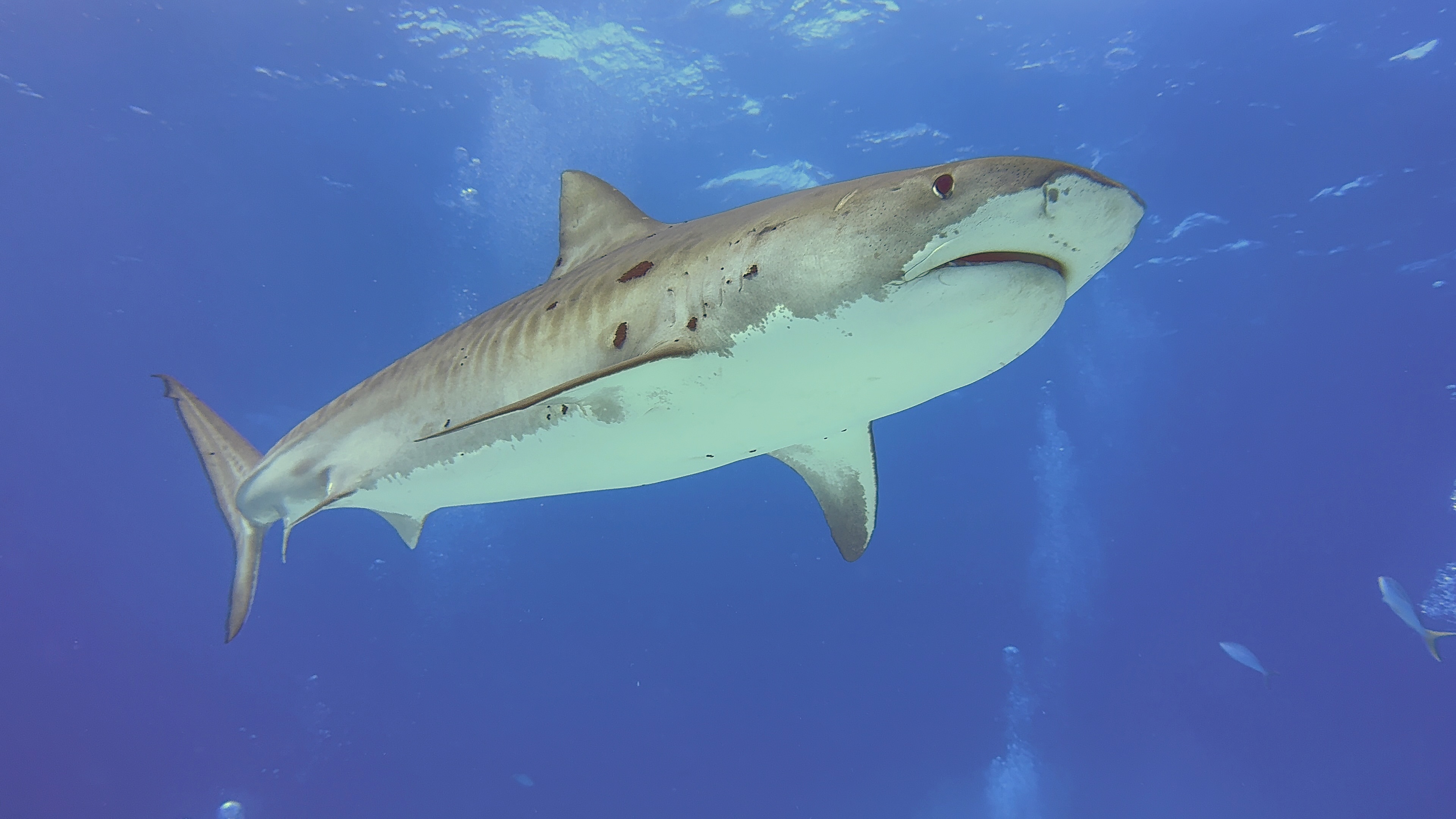
I have been lucky enough to experience tiger shark diving in both the Bahamas and the Maldives. Both places were incredible, but they could not have felt more different. On paper, they sound similar: warm water, clear visibility, tropical islands and the chance to share the water with an apex predator. In reality, they are completely different kinds of encounters.
The Bahamas felt focused, powerful and close. It was the kind of tiger shark diving where you know exactly what you have come for, and from the moment you enter the water, the whole experience builds around that one extraordinary apex predator.
The Maldives felt bigger, more natural and more unpredictable. It was less about one single set-piece encounter and more about being dropped into a living ocean system where an apex predator can appear as part of a much wider story.
Why Tiger Sharks Feel Different
Before I compare the two destinations, I think it is worth saying this: tiger shark diving is not just about adrenaline.
People who have never done it often imagine fear first. They picture teeth, size, speed and danger. But underwater, the reality is more controlled and more thoughtful than that. You are aware of the animal, of course. You have to be. Tiger sharks are large, powerful apex predators and they deserve total respect.
But they are not chaotic. They are not reckless. They move with a slow, deliberate confidence that makes everything else seem to quieten down around them.
There is something unmistakable about a tiger shark. The broad head. The heavy body. The markings. The calm, almost investigative way they move. They do not need to rush. They have the presence of an apex predator that knows exactly what it is.
The Bahamas: Close, Focused and Cinematic
The Bahamas is the place I would describe as the more concentrated tiger shark diving experience.
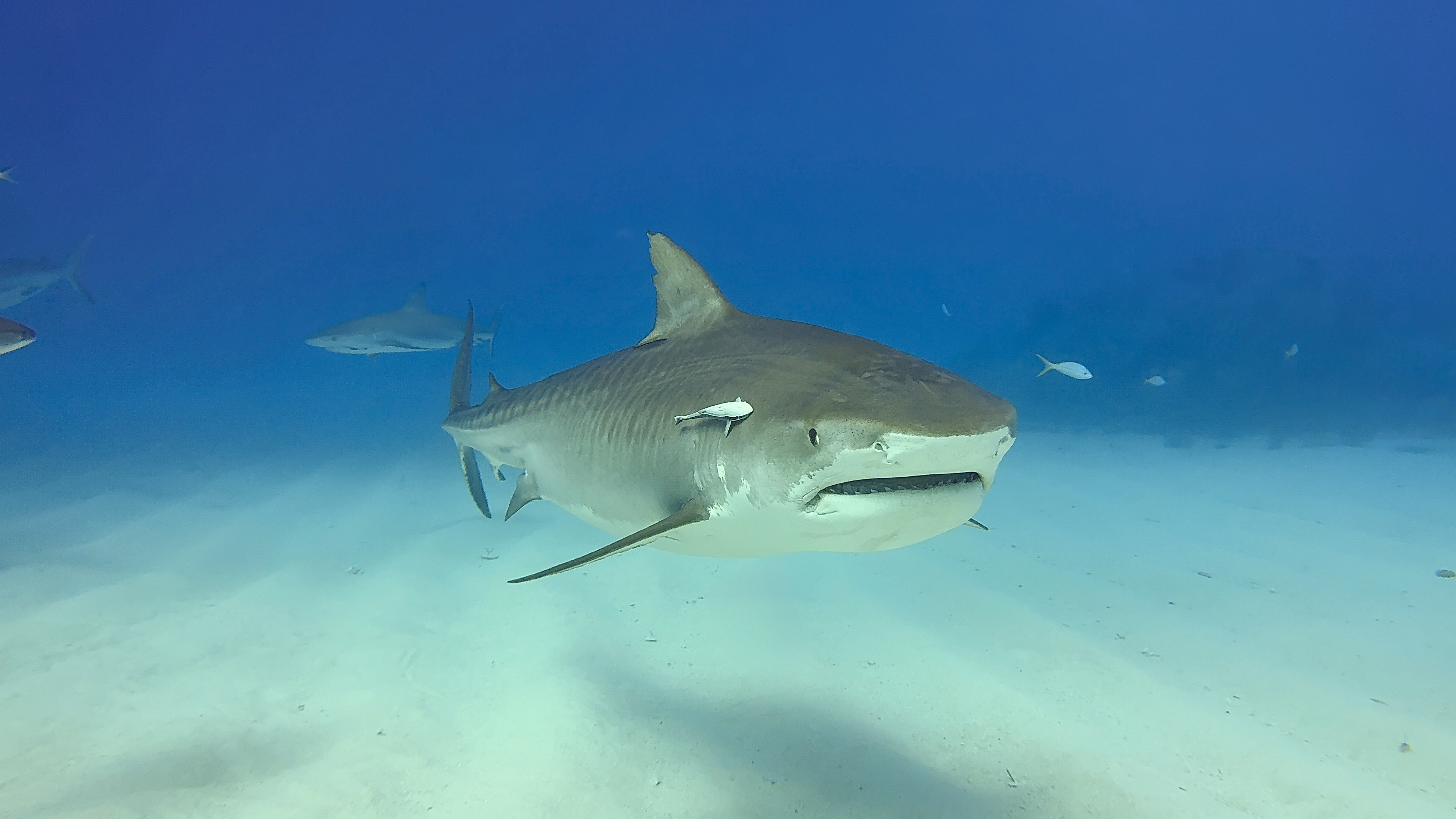
From the moment I got in the water, it felt like the dive had a clear purpose. The tiger sharks were the main event. The whole experience was built around seeing these apex predators clearly, understanding their behaviour, and being close enough to appreciate just how impressive they are.
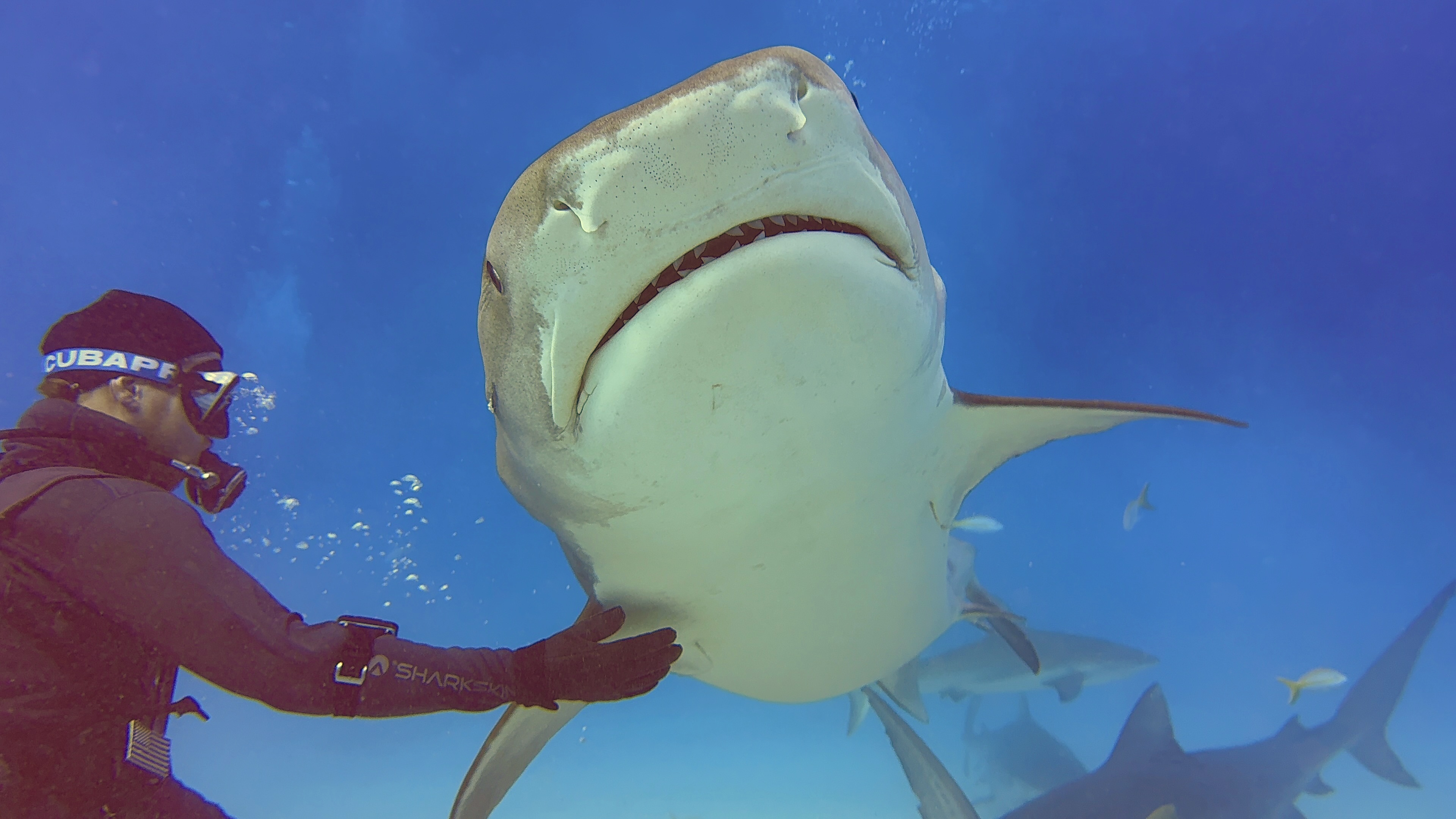
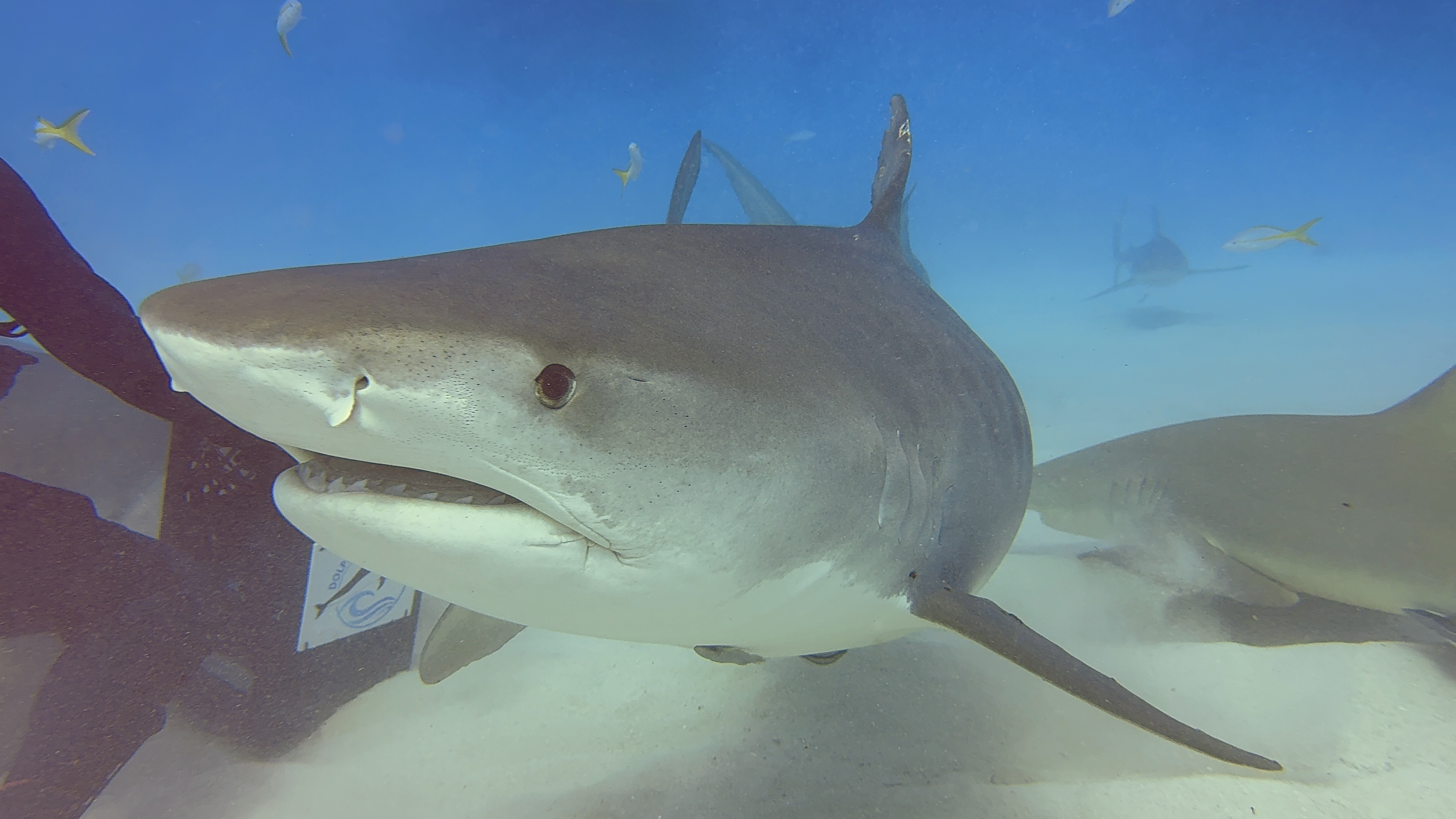
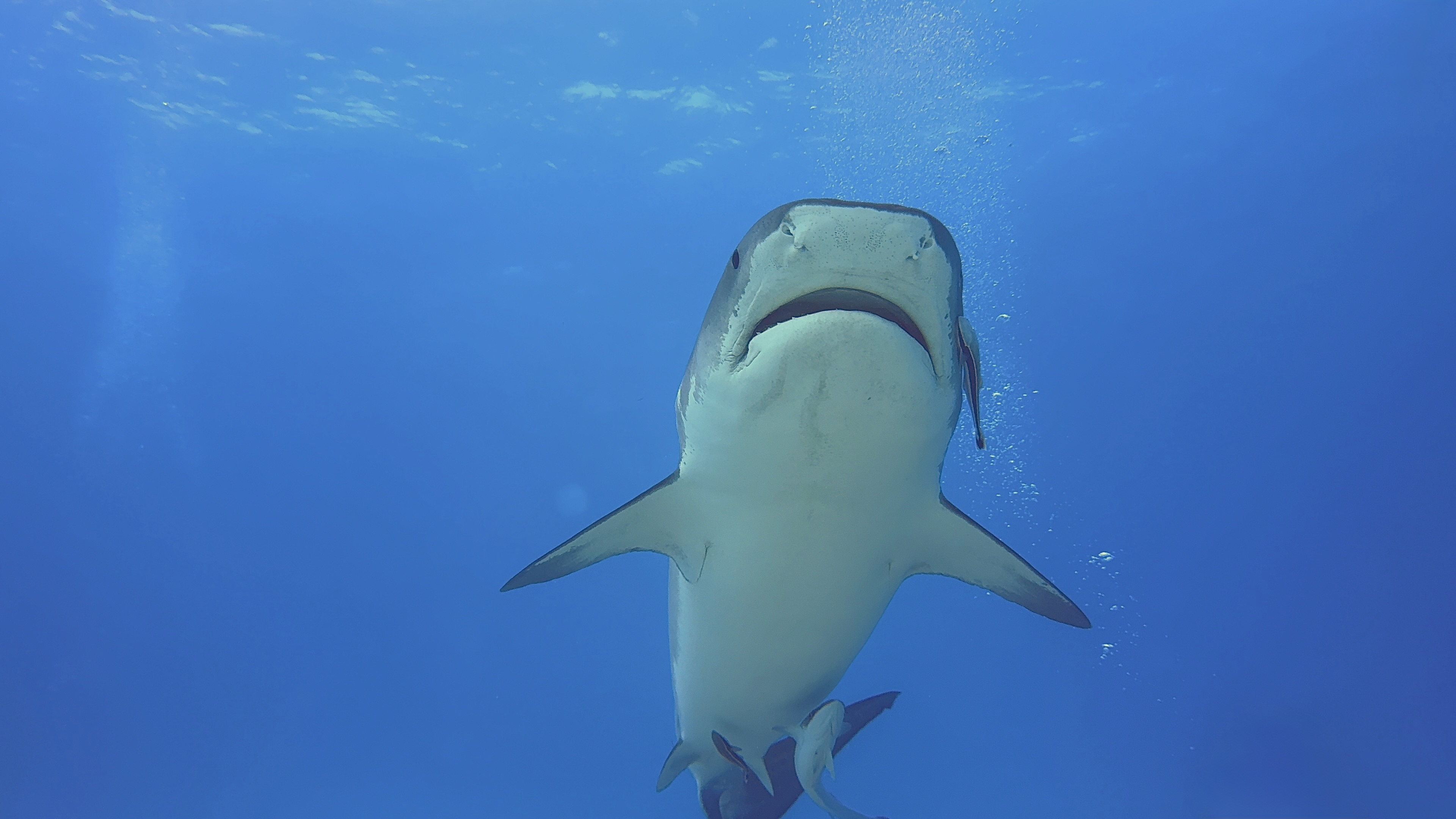
In the Bahamas, tiger shark encounters can feel very direct. You are not just hoping to see a distant shape in the blue. You are watching an apex predator move close enough to see the details: the stripes across the body, the size of the head, the way it turns, the way it holds itself in the water.
What I Loved About The Bahamas
The biggest strength of the Bahamas is how reliable and focused the tiger shark diving can be. If someone is travelling specifically because they want a standout tiger shark encounter, the Bahamas is hard to beat.
The visibility can be beautiful, the blue water gives everything a dramatic backdrop, and the dives are often set up in a way that allows you to really observe these apex predators rather than just catch a quick glimpse.
I also loved how much the experience challenged the way people talk about tiger sharks. Being that close to an apex predator makes you realise how misunderstood they are. They are not mindless or chaotic. They are precise, calm and incredibly adapted to their environment.
Dolphin Dream: The Team Behind The Dive
This Bahamas trip was on the Dolphin Dream liveaboard, and honestly, the team were incredible. Captain Scott, Jake, Katie, Steve and Donna made the whole experience feel organised, safe and full of life. Shark diving can sound serious from the outside, and it is serious, but they brought the kind of teamwork that lets you relax into the adventure.
What stood out was how smoothly everyone worked together. One person was watching the water, another was watching the divers, another was managing the rhythm of the dive, and somehow the whole boat still felt fun, welcoming and full of energy. That is not luck. That is a crew who know each other, trust each other and know how to turn a big shark week into something people remember for the right reasons.
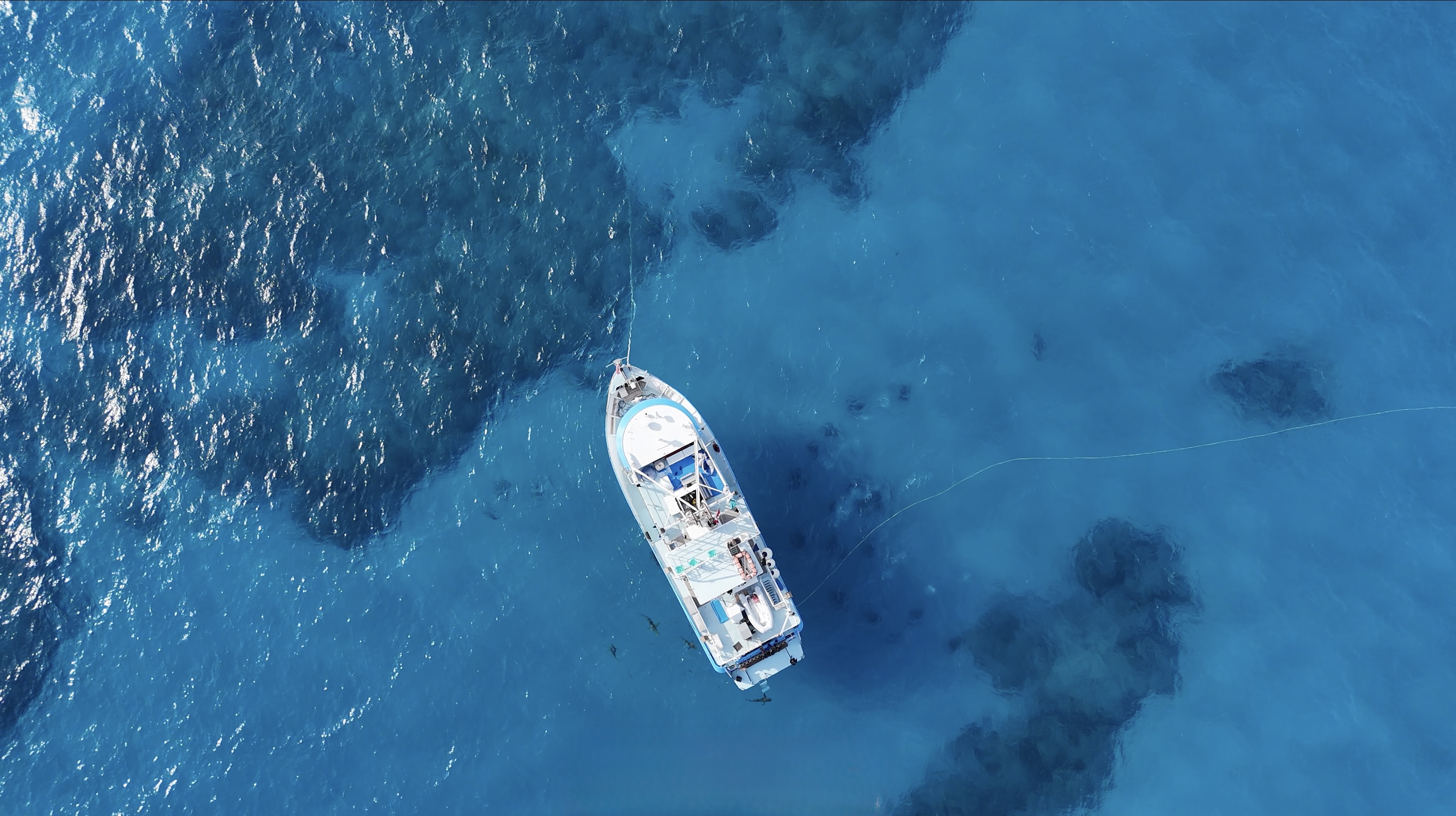
The drone shot shows the structure from above: the boat holding position, the divers set in a semicircle, and the shark box in the centre for the feeding dive. From underwater, you feel the discipline of that setup. From above, you can see the teamwork behind it. Everyone has a place, everyone has a role, and that is what allows the encounter to feel powerful without feeling chaotic.

Watch The Tiger Shark Film
The film captures the thing still photos can only hint at: the slow, deliberate movement of the tiger shark, the space between diver and apex predator, and the calm intensity of being there in real time.
Open on YouTubeThe Challenges Of The Bahamas
The same things that make the Bahamas so exciting can also make it feel more intense.
Because the dives can be tiger shark-focused, they may not have the same sense of variety as other destinations. The setup is also very specific: divers are usually positioned on or close to the seabed, the dive team manages the encounter carefully, and there can be a strong emphasis on dark equipment and reducing visual contrast in the water.
One thing I noticed personally was how different the equipment rules can feel compared with the Maldives. In the Bahamas, some shark-diving operators ask divers to cover exposed skin with hoods and gloves, especially on very close encounters. It makes the briefing feel more strict, but it also makes sense when the whole dive is built around staying calm, still and predictable while large sharks are nearby.
It can also feel mentally demanding. Not in a bad way, but in the sense that you need to be switched on. You are close to a large apex predator. You are following a structured dive plan. You are aware of where the tiger sharks are, where the group is, and how your own body language looks underwater. Depending on the site and operator, multiple shark species may also be present, which adds to how different the whole underwater procedure feels.
Fuvahmulah, Maldives: Wild, Natural and Full Of Suspense
Fuvahmulah gave me a completely different feeling.
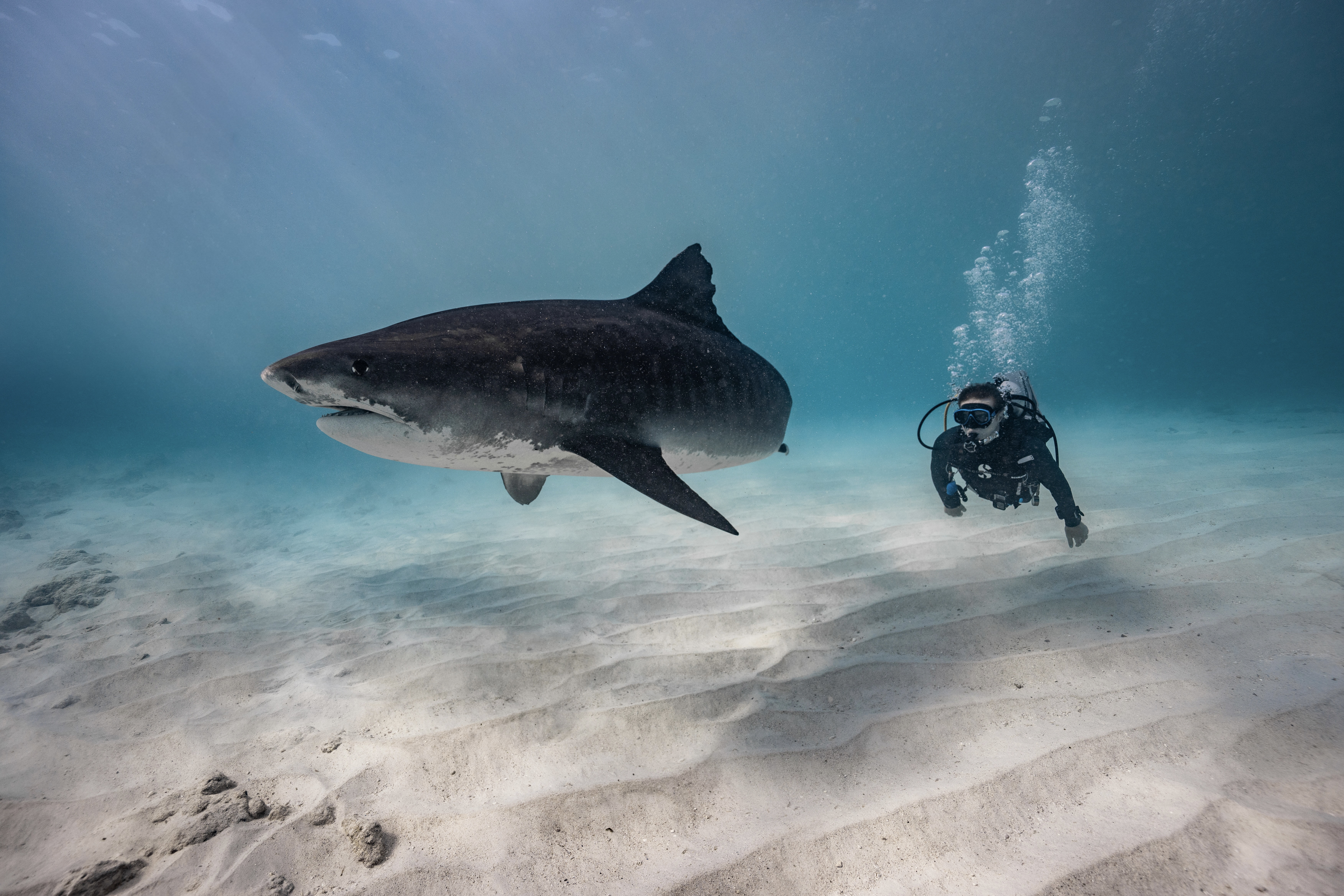
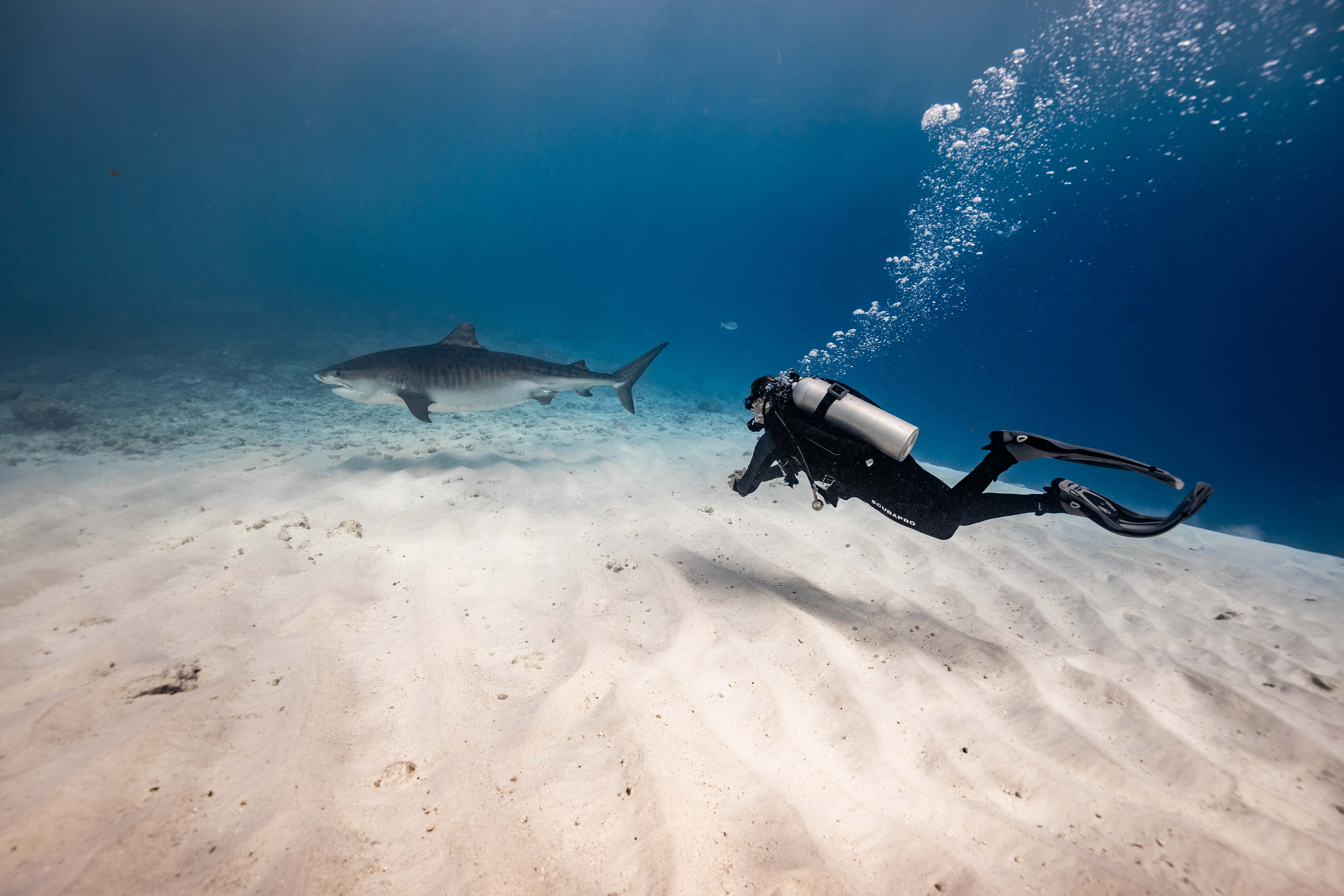
Where the Bahamas felt like a focused tiger shark encounter, Fuvahmulah felt like being part of a much bigger ocean story. The reefs, channels, currents, fish life, light and movement all played a role. The tiger shark was the apex predator moving through that world, but it was part of the experience rather than the entire experience.
That made the Maldives feel more natural and more unpredictable. You might be in blue water, near a reef edge, or around a dive site where the whole atmosphere is about waiting, watching and reading the ocean. The tiger shark encounter has a different kind of suspense because it feels less controlled. You are not just looking at an apex predator. You are watching the environment that brings it into view.
For me, the Maldives felt more immersive. It was not just "I went tiger shark diving." It was "I was in the ocean, and an apex predator moved through the same wild system I was briefly allowed to enter."
Pelagic Divers Fuvahmulah: Inah, Local Knowledge And A Team Built With Heart
In Fuvahmulah, I dived with Pelagic Divers Fuvahmulah, and the person who really stood out to me was Inah, the owner. Some dive centres are memorable because of the animals. Some are memorable because of the location. Pelagic was memorable because you could feel the person behind it. Inah has built something that feels personal, local and deeply connected to the island.
That matters when you are travelling somewhere like Fuvahmulah. The Maldives experience felt wild and open, but the Pelagic team gave it shape. They know those waters, they know how the sharks move, and they understand that a good tiger shark dive is not about chasing drama. It is about patience, positioning, timing and reading the ocean properly. That kind of confidence changes how you feel as a diver.
What impressed me most was how Inah has built his team. It does not feel like a group of people simply doing a job. It feels like a crew with a shared rhythm: calm briefings, clear roles, local knowledge, quiet humour and a real pride in what they are showing you. You arrive as someone hoping to see tiger sharks, but by the end you feel like you have been welcomed into a small part of Fuvahmulah itself.
If you are reading this and thinking about diving there, that is the thing I would pay attention to. Big shark encounters are powerful, but the people around you shape the memory just as much as the sharks do. A good team helps you stay calm enough to actually take the moment in. Pelagic Divers gave me that feeling. I would go back in a heartbeat, not only for the tiger sharks, but for the people, the island energy and the way Inah's team made the whole experience feel meaningful.
In the Bahamas, Dolphin Dream showed me the strength of a highly organised liveaboard team. In the Maldives, Pelagic Divers showed me the value of local knowledge, quiet confidence and letting the ocean lead.
What I Loved About The Maldives
The Maldives is incredible because of the atmosphere around the encounter.
Even on a tiger shark-focused trip, the experience is rarely only about the apex predator itself. There is reef life, movement, changing light, blue water, and the constant feeling that the ocean is much bigger than the plan you had for the dive.
The marine life also feels wonderfully layered. One moment you are watching the reef or the blue, the next the whole mood shifts because an apex predator appears. That change in energy is hard to explain unless you have felt it underwater.
The Challenges Of The Maldives
The biggest challenge with the Maldives is that it can be less predictable.
That is part of the magic, but it also means you cannot always expect the same kind of close, structured apex predator encounter that people often associate with the Bahamas. The ocean decides. Conditions, currents, seasons and dive sites all matter.
The rules around equipment can also feel very different. In the Maldives, dive centres often discourage or do not allow gloves, mainly to protect the reef and reduce the temptation to touch coral or marine life. Hoods are usually more about comfort than shark safety. That does not mean the Maldives should be treated casually. It simply shows how differently each destination manages divers, sharks and the reef environment.
Some dives can also be more demanding because of current, entry style, or the way the group moves through the water. In Fuvahmulah, tiger sharks are encountered in their natural local environment, so local knowledge, group awareness and listening closely to the guides really matter. Normal dive equipment may be used depending on the operator's safety procedures, but that does not make the experience casual. Shark diving carries risk and should only be done with reputable, experienced operators while following their procedures.
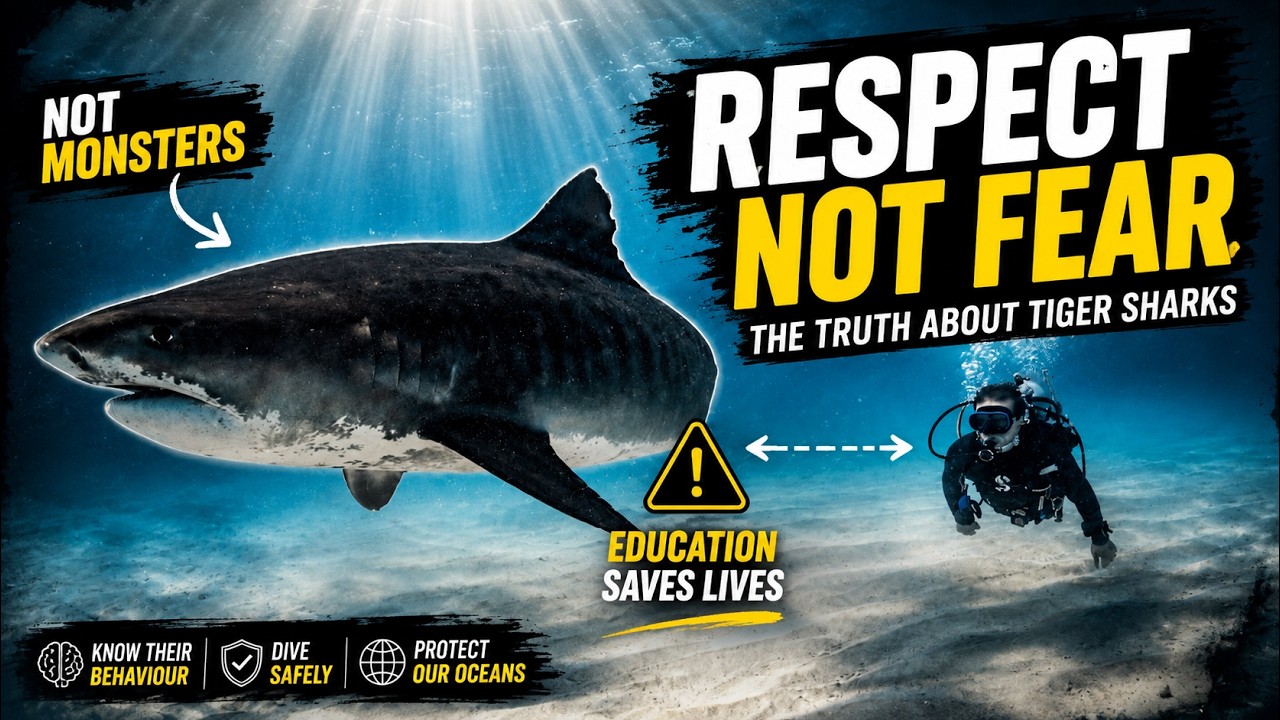
Watch My Tiger Shark Dive in Fuvahmulah
Experience what it is really like to dive alongside tiger sharks in Fuvahmulah, Maldives, and see how education, experienced guides and respectful diving practices make these encounters possible.
Open on YouTubeBahamas vs Maldives: The Honest Tiger Shark Comparison
Neither is better in a simple way. They do different things brilliantly.
Direct apex predator encounter
Close, powerful, front-row tiger shark diving with a more controlled setup, seabed positioning, experienced shark-diving teams and a very specific underwater procedure.
Atmospheric apex predator experience
Wild, wider, more dynamic and more woven into the local ocean environment, with strong reliance on guide instructions, positioning and group awareness.
Recorded shark bites and different rules
Another difference worth mentioning is the wider safety context. The Bahamas has more recorded unprovoked shark bites than the Maldives, but I would be careful not to turn that into a simple "more dangerous" headline. Shark-bite risk is still very low, and the number of incidents is affected by many things: how many people are in the water, what activities they are doing, local shark species, reporting, and the style of shark tourism in each place.
For me, the more useful comparison is how the two destinations manage the experience. The Bahamas can feel more controlled and equipment-focused, with some operators asking for hoods, gloves and darker gear. The Maldives often feels more conservation-focused, with gloves discouraged or not allowed by many dive centres to protect the reef. Both approaches are about respect, but they show that shark diving is not the same everywhere.
| Destination | Pros | Cons | Best for |
|---|---|---|---|
| Bahamas | Close apex predator encounters, strong visibility, iconic tiger shark footage, structured shark-diving teams, and the chance of seeing multiple shark species. | Can feel intense, less varied depending on itinerary, and the dive procedure can include stricter rules around positioning, dark equipment, hoods, gloves and body language. | Divers who want a powerful tiger shark-first trip. |
| Fuvahmulah | Wild atmosphere, natural local environment, more open and dynamic encounters, and a strong sense of being in the tiger shark's world. | Less predictable, conditions can be challenging, gloves may be discouraged or not allowed, and the experience depends heavily on local knowledge, operator procedures and group awareness. | Divers who want tiger sharks as part of a wider Maldives ocean experience. |
Which Would I Recommend?
If someone asked me which trip they should book first, I would ask what they want to feel.
If they want the clearest, closest, most dramatic apex predator encounter, I would say the Bahamas.
If they want a broader dive experience, where the apex predator is part of a bigger journey through reefs, blue water, local knowledge and island life, I would say Fuvahmulah.
For filming, the Bahamas gives you those big, unmistakable tiger shark moments. For storytelling, Fuvahmulah gives you texture: the travel, the waiting, the water, the reef, the suspense, and the moment the apex predator appears.
I would not describe either as automatically better. They are different tiger shark experiences, and both deserve to be treated seriously. The important thing is choosing reputable, experienced operators, listening to the briefing, and respecting the procedures that make these encounters possible.
"The Bahamas showed me their power up close. The Maldives showed me their place in the wider ocean."
What Both Trips Taught Me
Both locations gave me completely different experiences, but the same lasting feeling: respect. Tiger sharks are powerful apex predators, and they should never be treated casually.
However, when we understand their behaviour, follow experienced professionals and enter their world responsibly, we can replace unnecessary fear with education. That is what both trips gave me. Not a reason to be careless, but a better reason to care.
Would you choose the clear blue waters of the Bahamas or the wild encounters of Fuvahmulah?