Some trips feel like they begin when you step on the boat. Dolphin Dream felt like it began before that, somewhere in the space between nerves, weather, blue charts, and the thought: I am actually going to Tiger Beach.
This was the Bahamas on a shark-focused liveaboard: not a hotel trip with a few dives attached, but a floating base camp built around the daily rhythm of brief, kit up, breathe slowly, descend, watch, learn, eat, sleep, and do it all again.
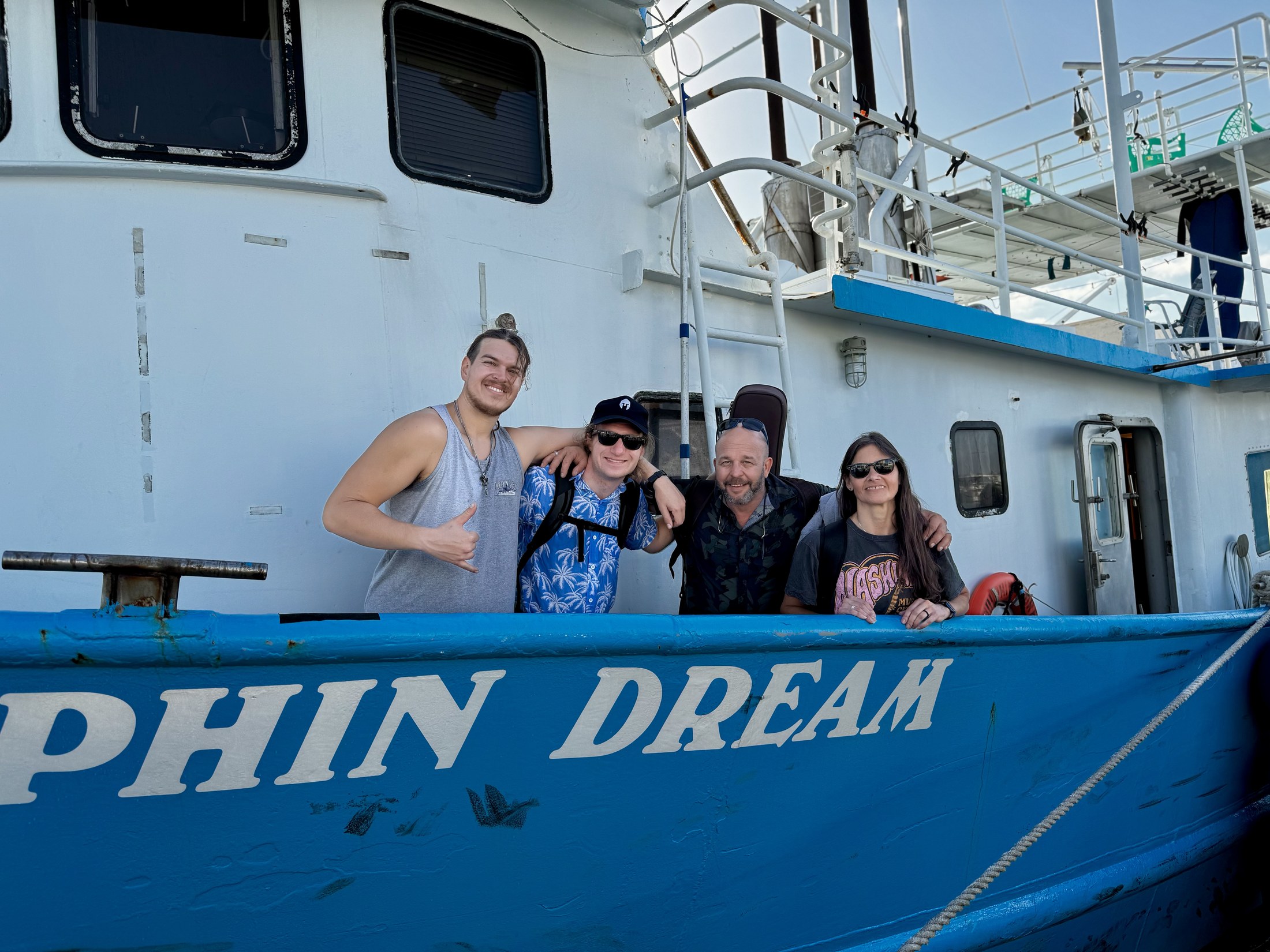
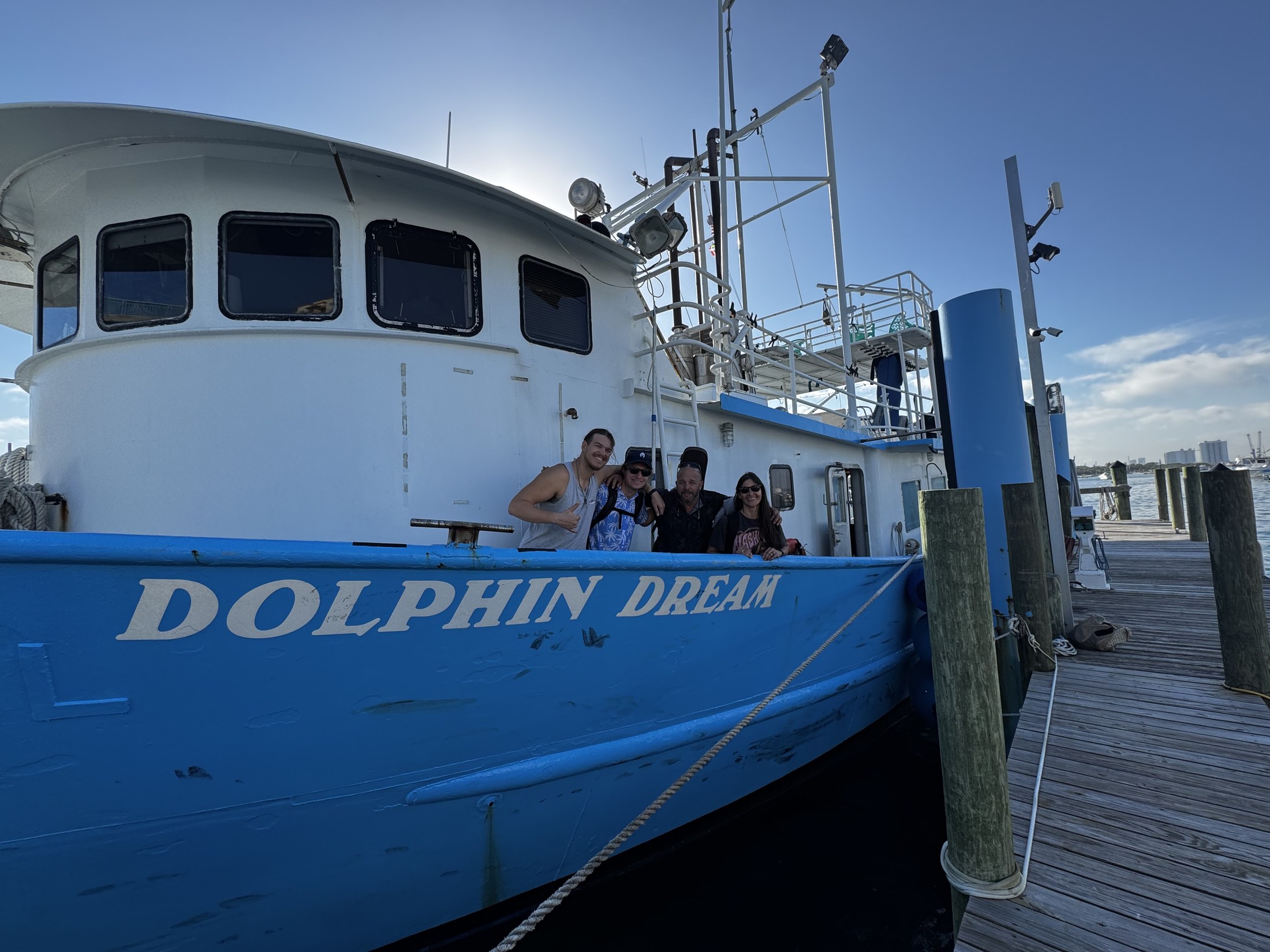
The Dolphin Dream is not a polished, anonymous resort boat. It has character. It has working edges, dive stickers, dry boxes, whiteboards, kit drying in the wind, and that unmistakable liveaboard feeling where the boat slowly becomes your whole world.
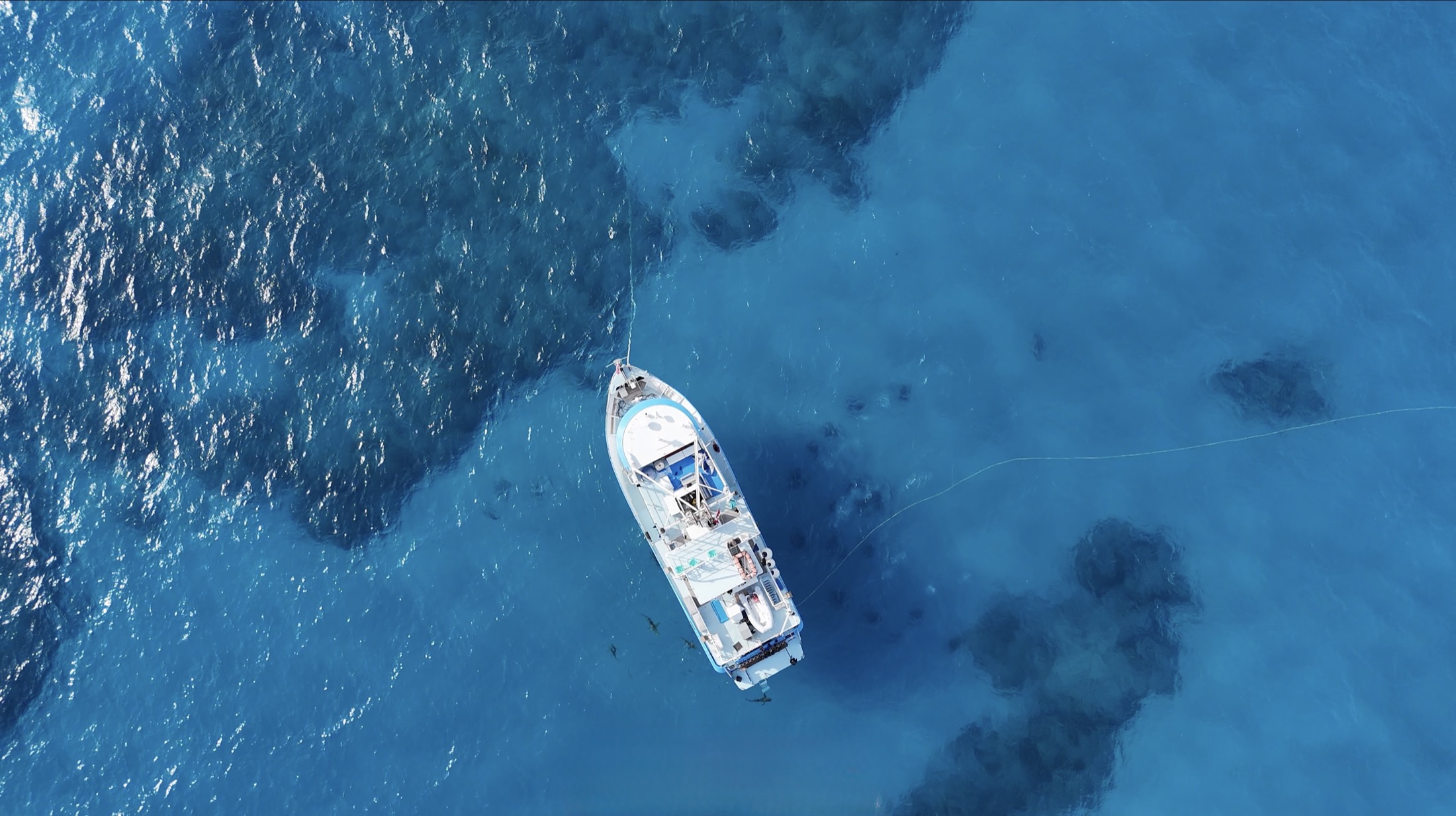
The Boat: A Working Shark-Diving Home
Dolphin Dream is described by the operator as an 86 ft by 26 ft ocean expedition trawler yacht, owner-operated by Captain Scott, and set up for small groups of 12 passengers or less. That size matters. You are not disappearing into a big commercial system. You are living with the crew, with the other divers, and with the rhythm of the sea.
The boat specialises in big-animal trips around Tiger Beach and Bimini, with shark-focused departures from Florida to the Bahamas. On paper that sounds like a simple itinerary. In real life it feels more elemental: leaving land behind, crossing into brighter water, then waking up where the sharks are.
What I loved was that everything on board had a purpose. The salon was where people talked, charged cameras, ate properly, and replayed the dives. The deck was where the anticipation built. The whiteboard was not decoration; it was the map of how the next encounter would work. The boat itself became part classroom, part home, part launchpad.
Ocean expedition trawler yacht, built for comfort, stability, and long days in the Bahamas.
Small-group liveaboard rhythm, where everyone learns the plan and shares the same blue-water week.
Focused shark diving, with tiger sharks, lemon sharks, reef sharks, and great hammerhead potential depending on itinerary and conditions.
The Whiteboard Was The Storyboard
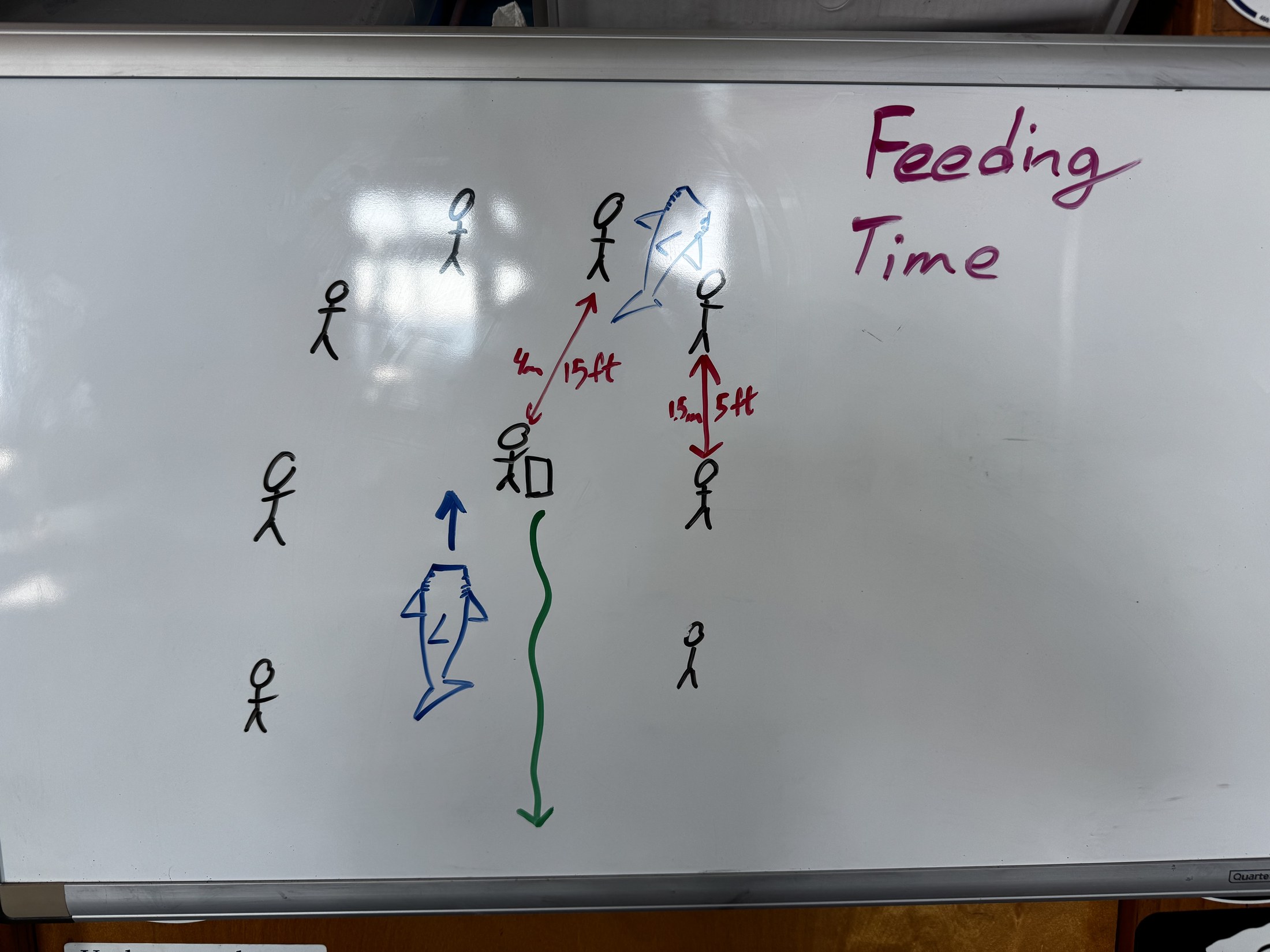
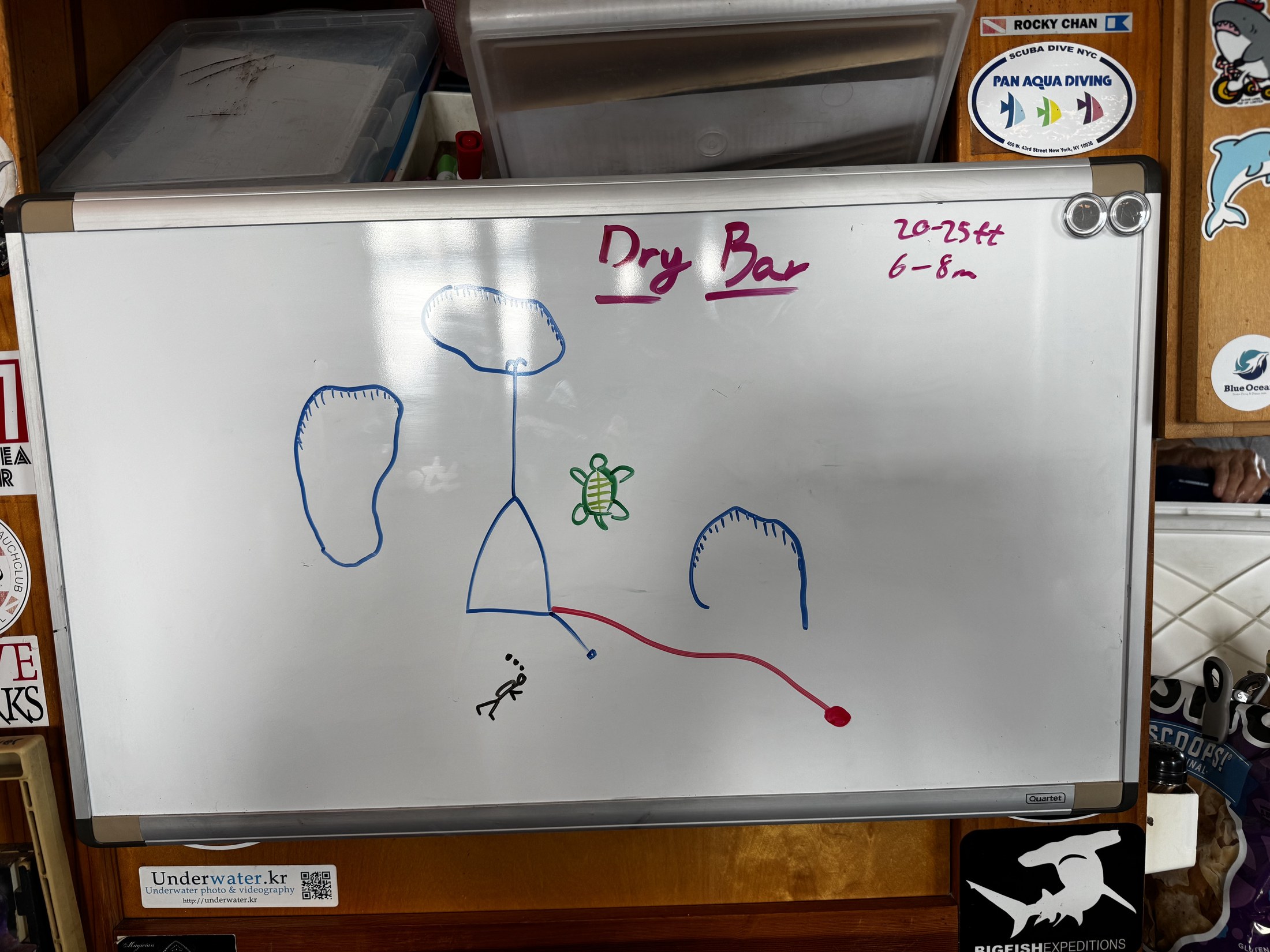
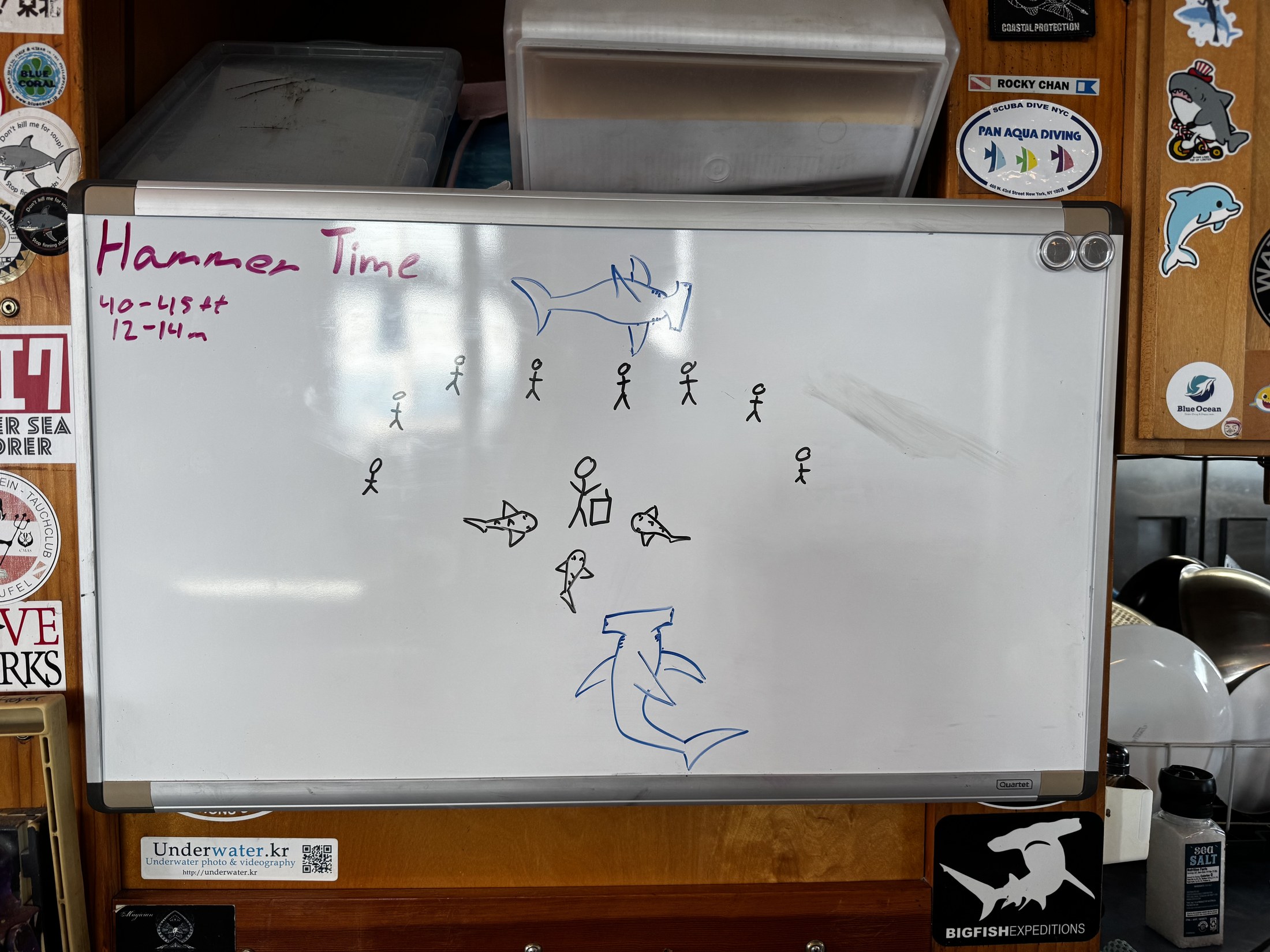
The attached briefing photos are more than behind-the-scenes snapshots. They are the visual language of the trip. Before the ocean becomes emotional, it becomes practical: depths, positions, current, bait box, shark path, diver spacing, and the exact way everyone should behave when the animals arrive.
That is what made the close encounters feel powerful instead of chaotic. The crew turned a wild ocean moment into a shared plan. You could see it in marker pen before you ever saw it in blue water.
One board shows a shallow site around 20-25 ft / 6-8 m, drawn almost like a little reef-and-sand puzzle. Another is marked "Hammer Time" at 40-45 ft / 12-14 m. The "Feeding Time" drawing is the most revealing: divers low and spread out, the feeder and bait setup placed deliberately, and distance arrows around 15 ft / 4 m and 5 ft / 1.5 m.
Tiger Beach: Bright Sand, Slow Breathing
Tiger Beach has a strange calm to it. The sand is pale, the water can look impossibly blue, and the whole scene feels open enough that you notice every change in movement. A shadow becomes a shape. A shape becomes a shark. Then suddenly your attention narrows down to breath, posture, and the slow approach of an animal that does not need to hurry.
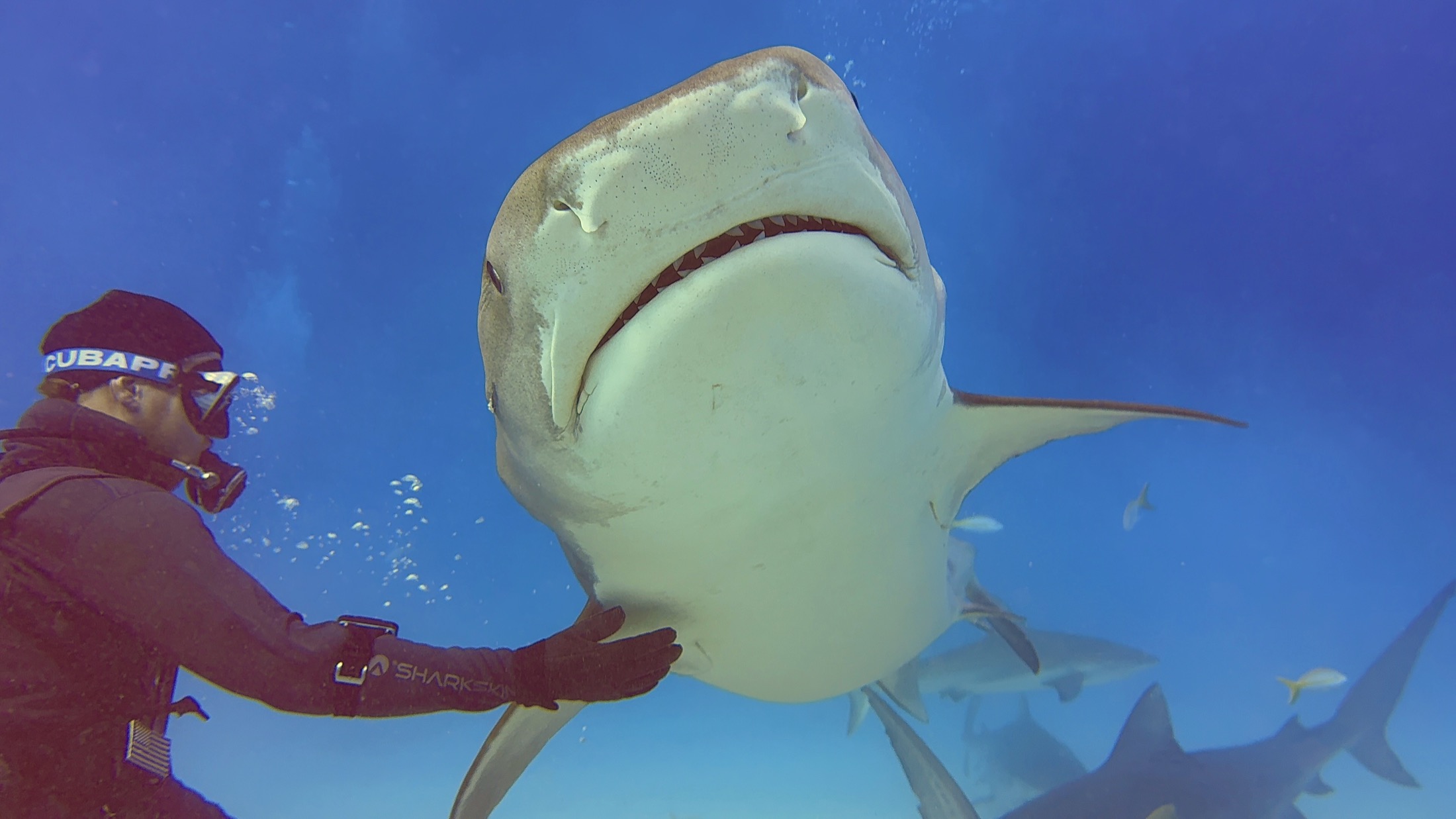
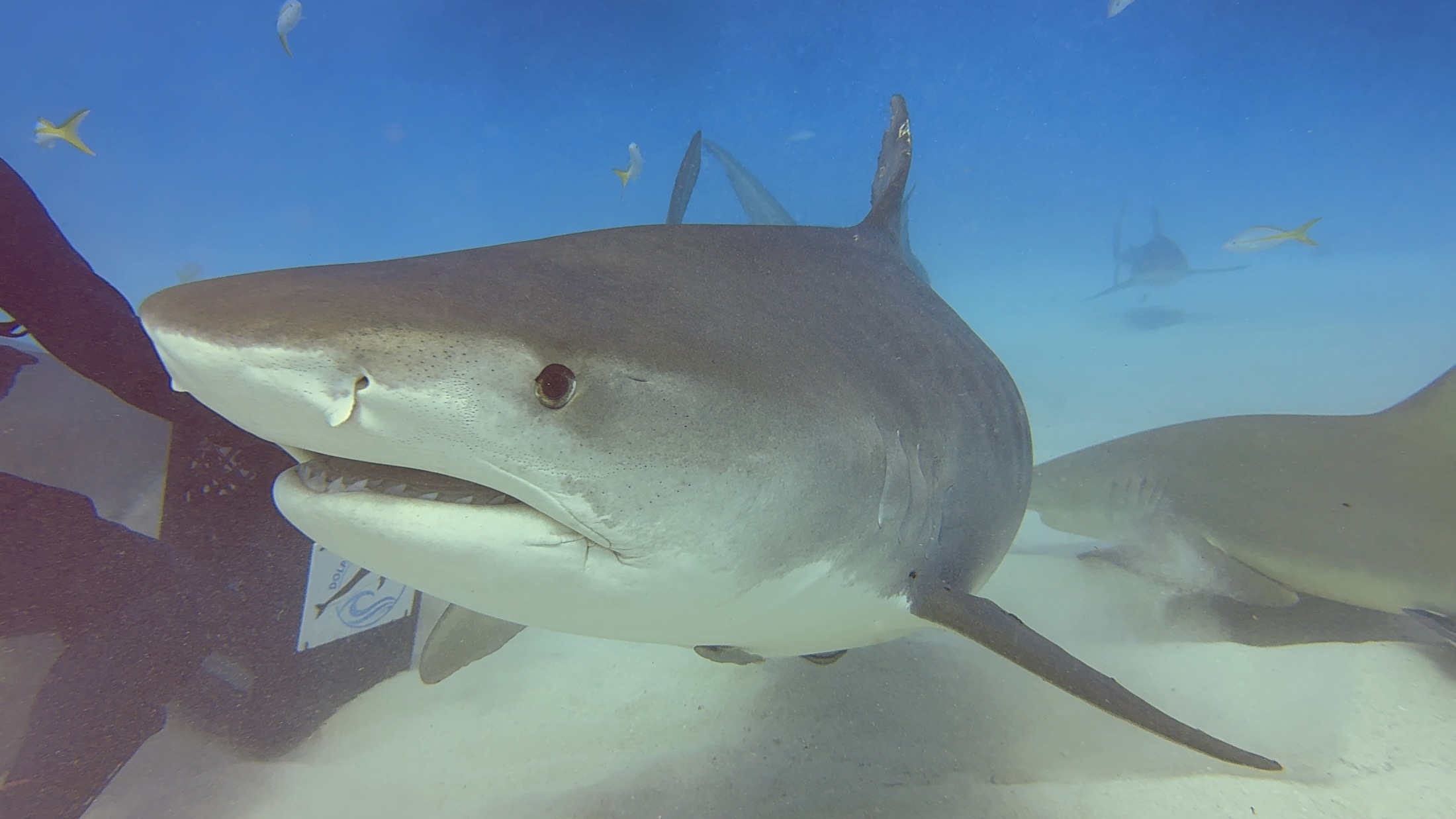
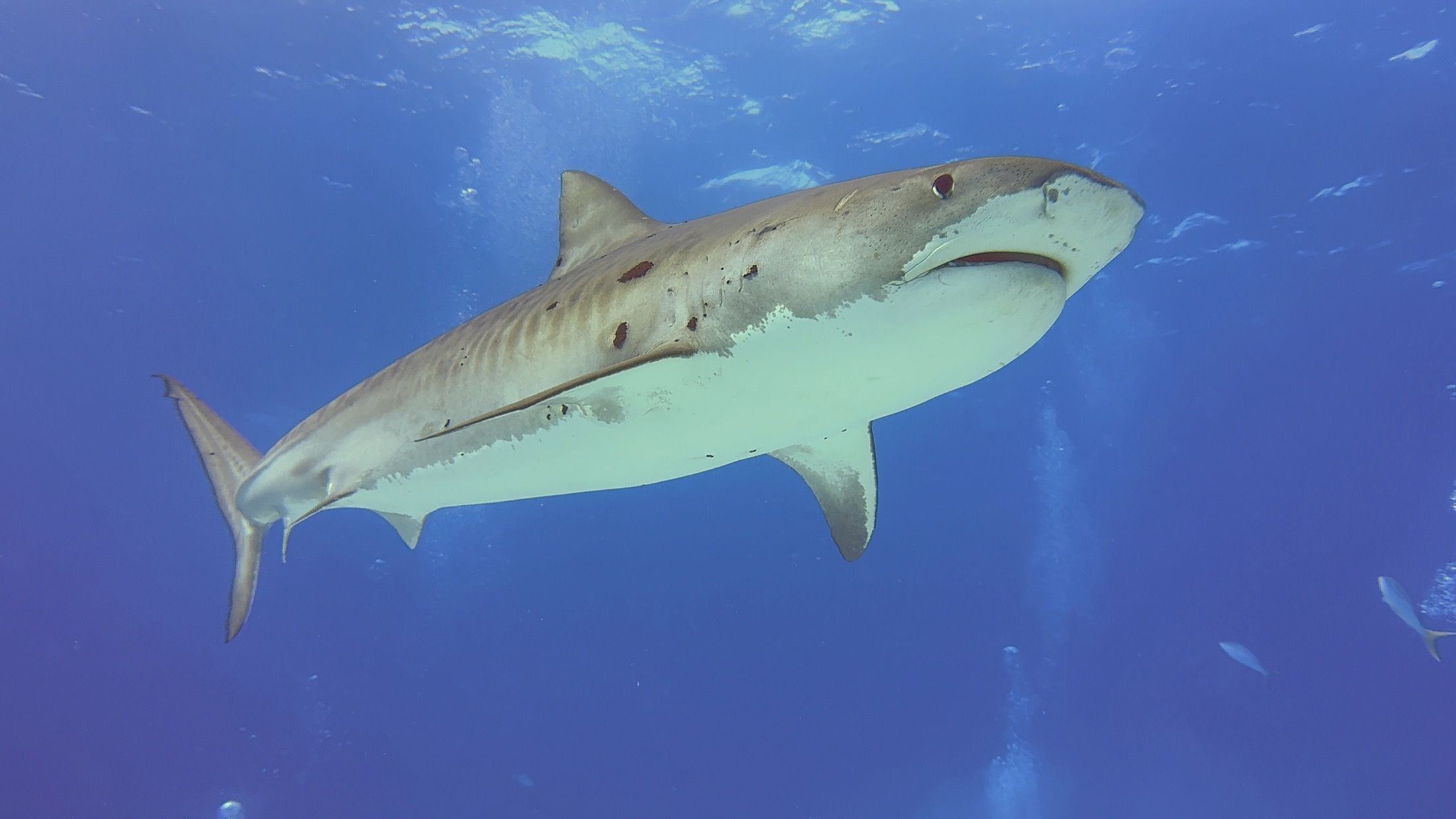
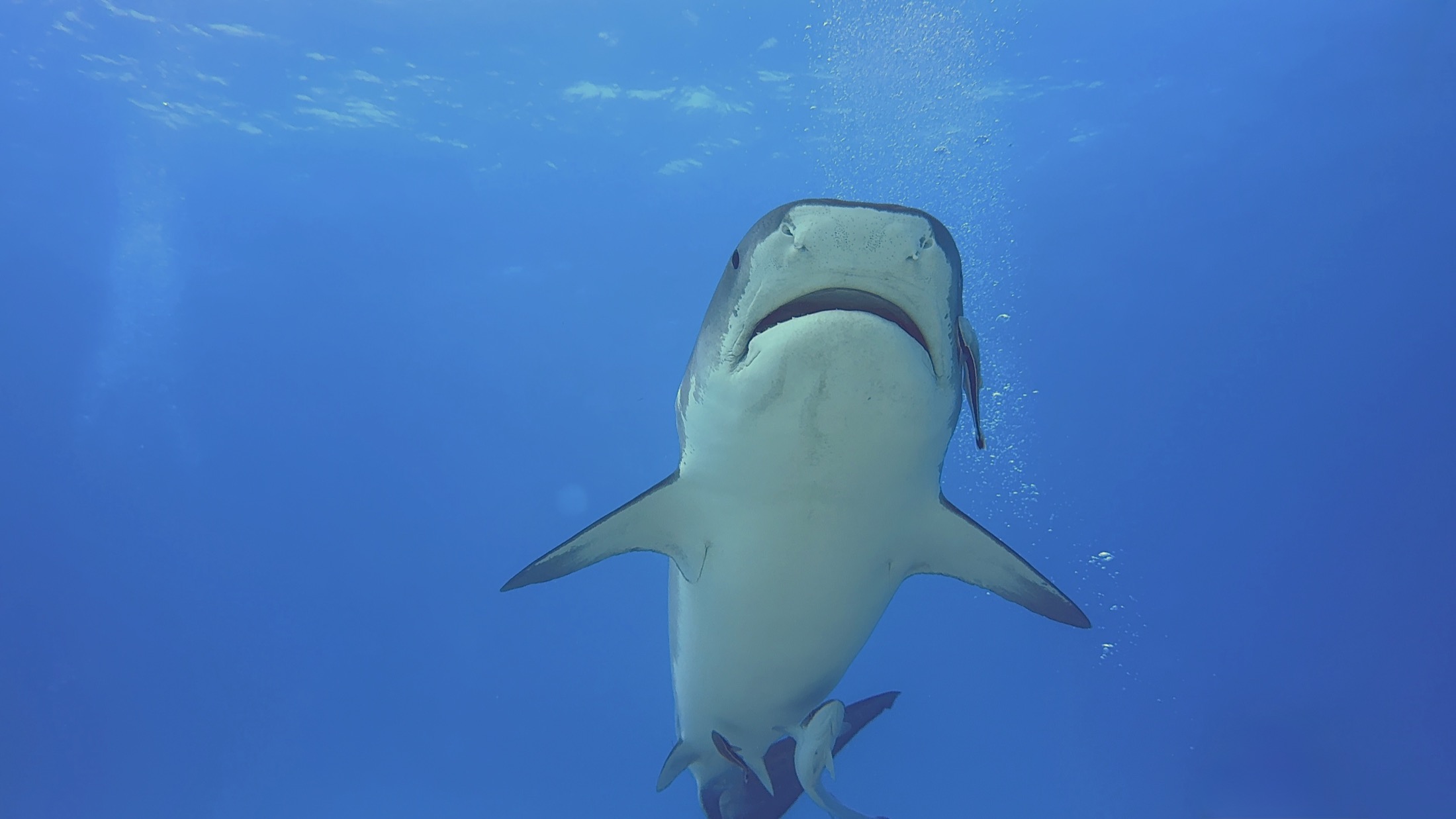
The tiger sharks were not frantic. They moved with the heavy confidence of animals that know exactly where they are in the food chain. Their bodies looked built from patience: broad heads, blunt power, striped flanks, and eyes that seemed to register everything without wasting energy.
Seeing one tiger shark is impressive. Seeing several, while other sharks and fish move through the background, changes the scale of the whole dive. You are no longer watching a single animal. You are inside a working ocean scene.
Feeding Time Was About Discipline, Not Drama
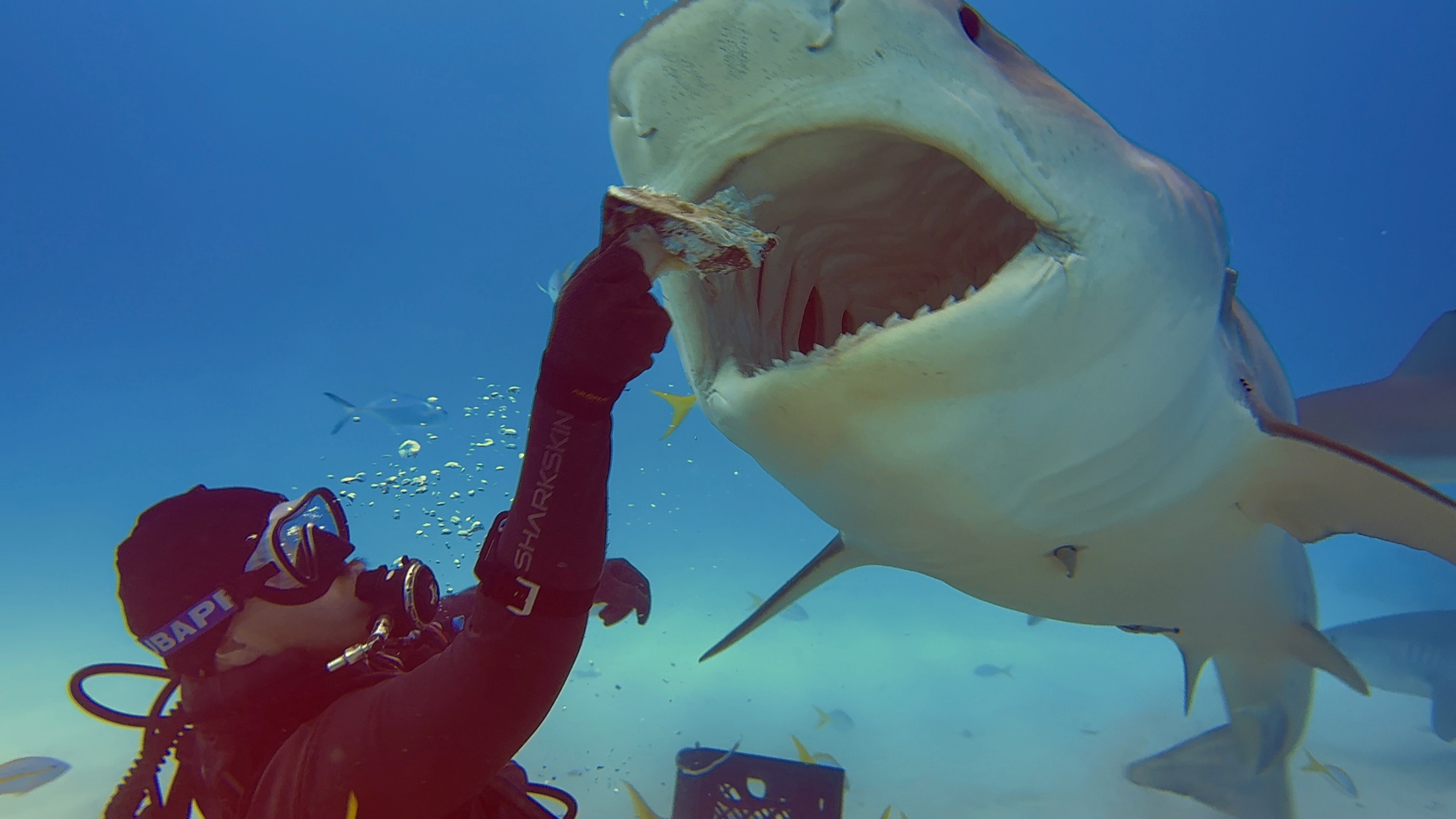
The phrase "feeding dive" can sound wild if you have never seen the structure behind it. On Dolphin Dream, the important part was not the bait. It was the control around it: where divers sat, where hands stayed, how close was too close, how the feeder worked, and how everyone kept the same calm body language.
The whiteboard captured that better than any glossy brochure could. Stick figures, arrows, a shark outline, and distance notes might look simple, but underwater those drawings become muscle memory. Stay low. Stay still. Watch the shark. Watch the guide. Keep your hands in. Let the animal move through the space.
That structure changed the emotional tone of the dive. It did not remove the intensity. It gave the intensity a frame.
When The Sharks Came Close
Close tiger shark encounters do something unusual to time. A pass can last only a few seconds, but in your head it stretches. You notice the scratches on the skin, the eye, the angle of the pectoral fin, the little fish travelling beside the shark like sparks around a moving planet.
What surprised me most was not fear. It was clarity. The closer the animal came, the more focused everything became. You realise that panic would be useless, but attention is everything. The shark is reading the space. The crew is reading the shark. You are reading your own breathing.
That is why I keep coming back to the word respect. Not slogan respect, not poster respect, but physical respect. The kind you feel in your hands when you keep them still, in your knees when you stay planted, and in your chest when you choose calm.
The Crew Made The Big Moments Feel Possible
On a trip like this, the crew are not background characters. They are the difference between a big-animal encounter feeling overwhelming and a big-animal encounter feeling meaningful.
Captain Scott's name is all over the Dolphin Dream story because the boat is owner-operated and built around his long experience in these waters. But what stood out on my trip was the wider team rhythm: Scott, Jake, Katie, Steve, Donna, and the rest of the people who kept the week moving. Briefing, filling, cooking, watching, guiding, laughing, checking, resetting. Again and again.
That is the hidden work of a liveaboard. The dives are the visible part. The trust is built in the small things: tanks ready, food appearing when everyone is exhausted, someone noticing the weather, someone checking the ladder, someone explaining the plan one more time because the plan matters.
Life Between Dives
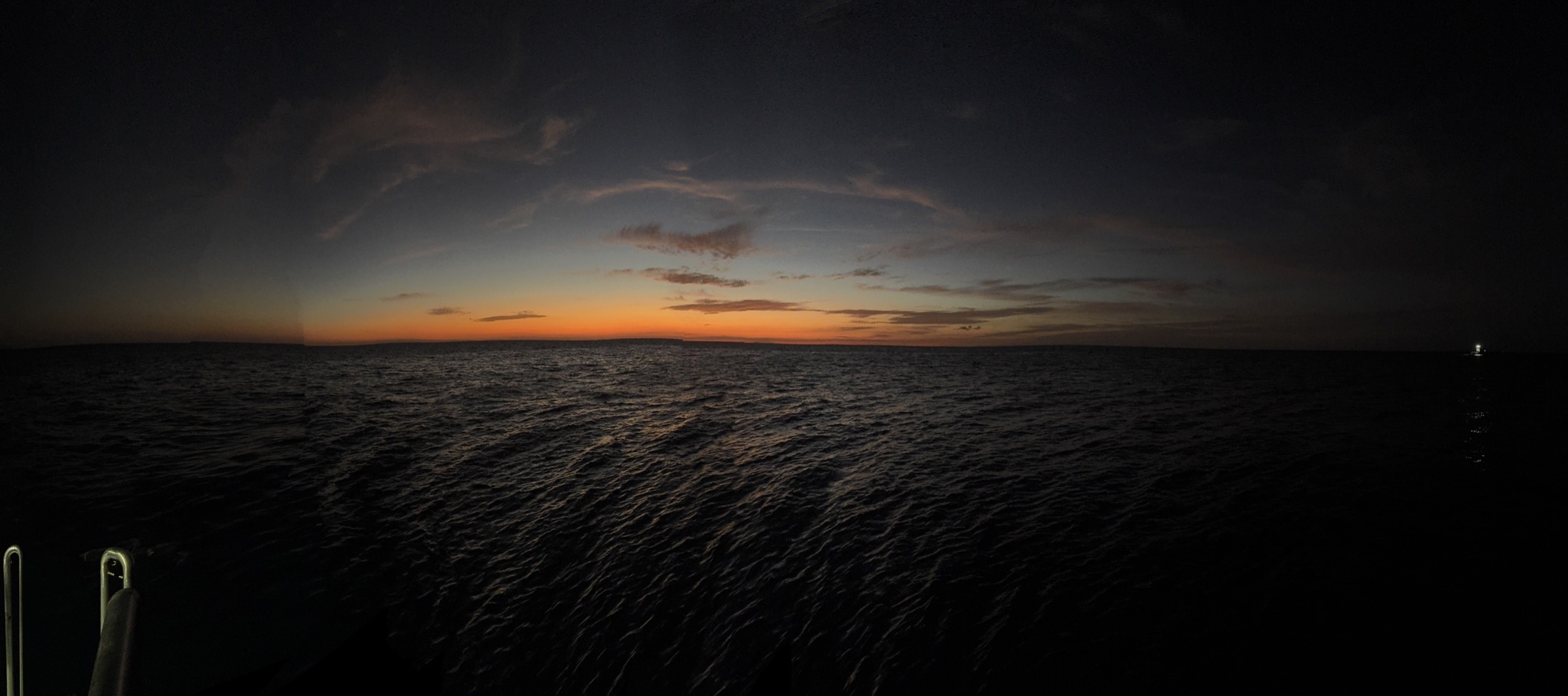
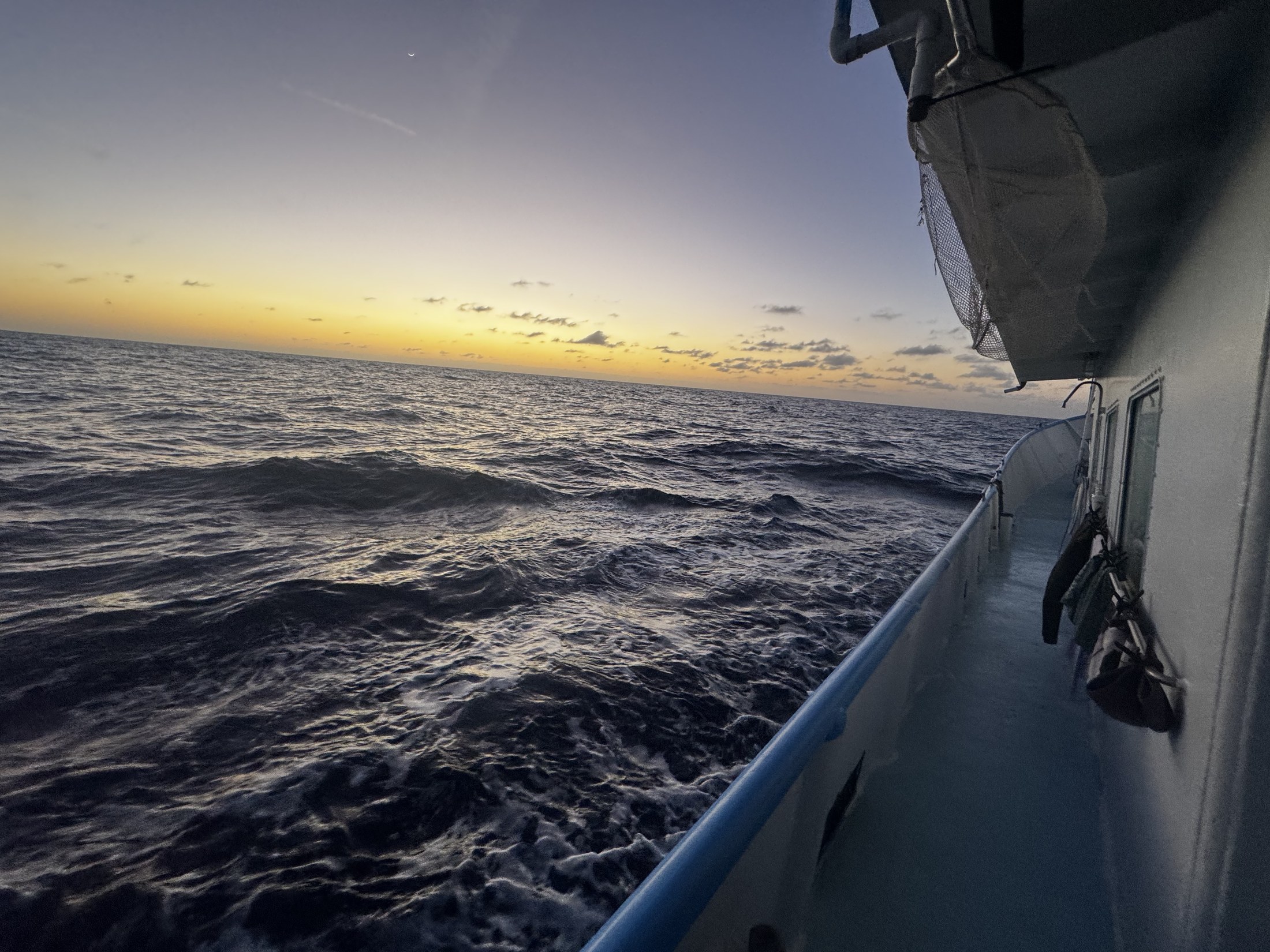
Some of my favourite memories were not underwater. They were the sky changing at the edge of the deck, the sound of the sea against the hull, the exhausted quiet after a big dive, and the strange comfort of being far enough from land that the normal world felt paused.
Liveaboards create a kind of repetition that becomes addictive: wake up, check the water, eat, brief, dive, talk, dry kit, look at the horizon, sleep hard. On Dolphin Dream that rhythm had a shark-shaped heartbeat.
What Dolphin Dream Taught Me
The trip was not only about seeing tiger sharks. It was about learning what good shark diving needs around it.
Close does not mean careless
The closest moments were possible because the briefings were strict, the crew were switched on, and the divers understood their job.
The whiteboard matters
The diagrams looked simple, but they turned complex animal encounters into something the whole group could understand together.
Boat life changes the dive
Sleeping near the dive sites made the ocean feel continuous. The shark dives were not events; they were the rhythm of the week.
Respect is physical
Respect was not just how I thought about sharks. It was how I moved, where I sat, how I breathed, and how carefully I listened.
Would I Recommend It?
Yes, but with the right expectations. This is not a casual first liveaboard for someone who wants a gentle reef holiday. The operator says these shark trips are for advanced open water certified, experienced divers, and that makes sense. The diving can be intense, the animals are large, and the whole experience asks you to be calm, capable, and comfortable following instructions.
If you are ready for that, Dolphin Dream offers something rare: a focused Bahamas shark-diving week where the boat, crew, briefings, and ocean all point toward the same unforgettable thing.
I came away with tiger shark images in my head, but also with something quieter: a better understanding of how respect, preparation, and wonder can sit together in the same dive.
Photo Notes From The Trip
Boat, boards, blue water, and the little fragments that make a liveaboard week feel like its own world.
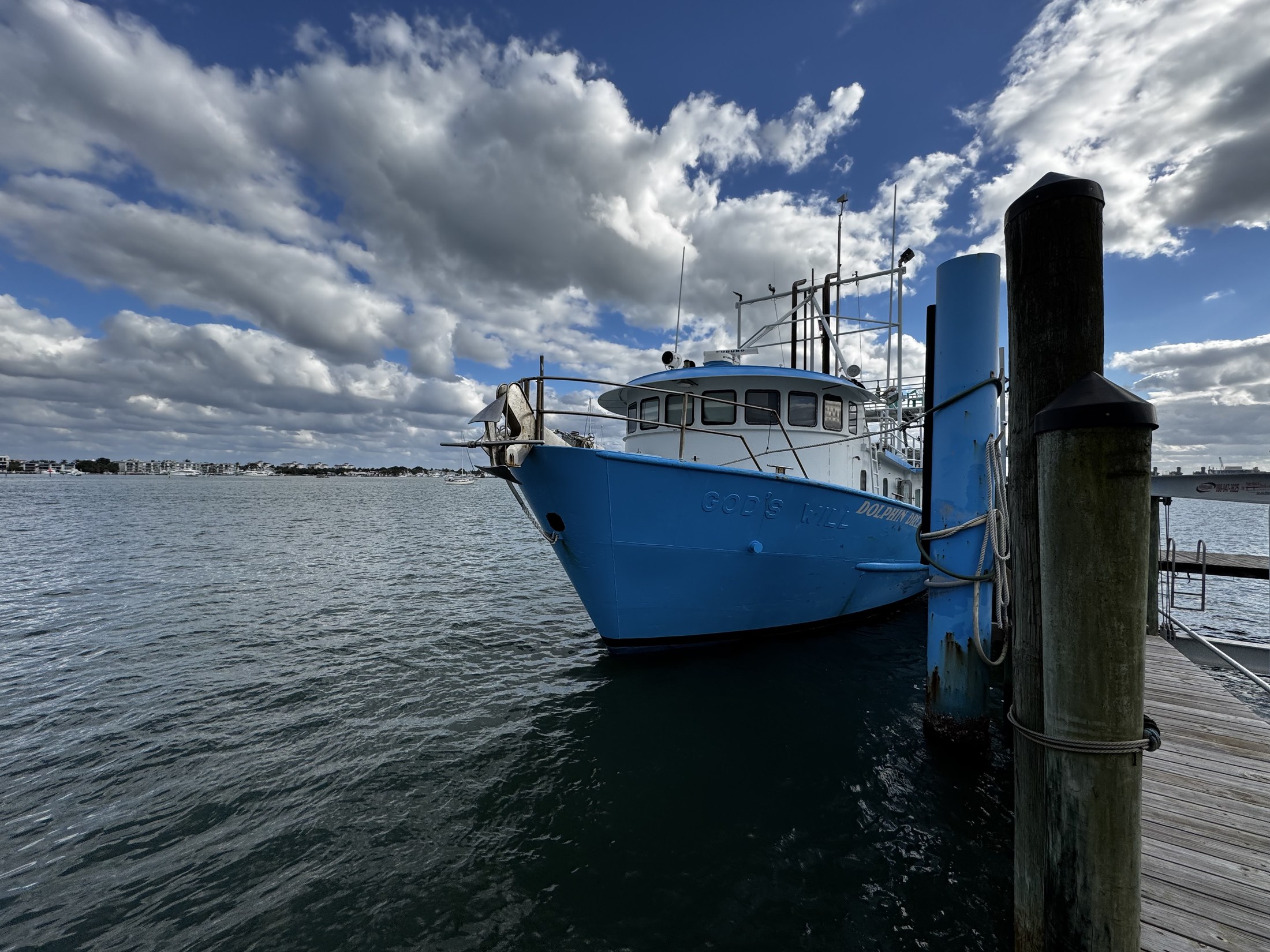
The dream was not just the sharks. It was learning how to meet them properly.
Dolphin Dream gave me one of those trips that keeps unfolding after it is over. At first you remember the shark passes. Then you remember the crew, the briefing board, the surface intervals, the food, the exhausted laughs, the horizon, and the strange quiet before jumping in.
That is what a good liveaboard does. It does not give you one memory. It gives you a whole floating chapter.