Latest film
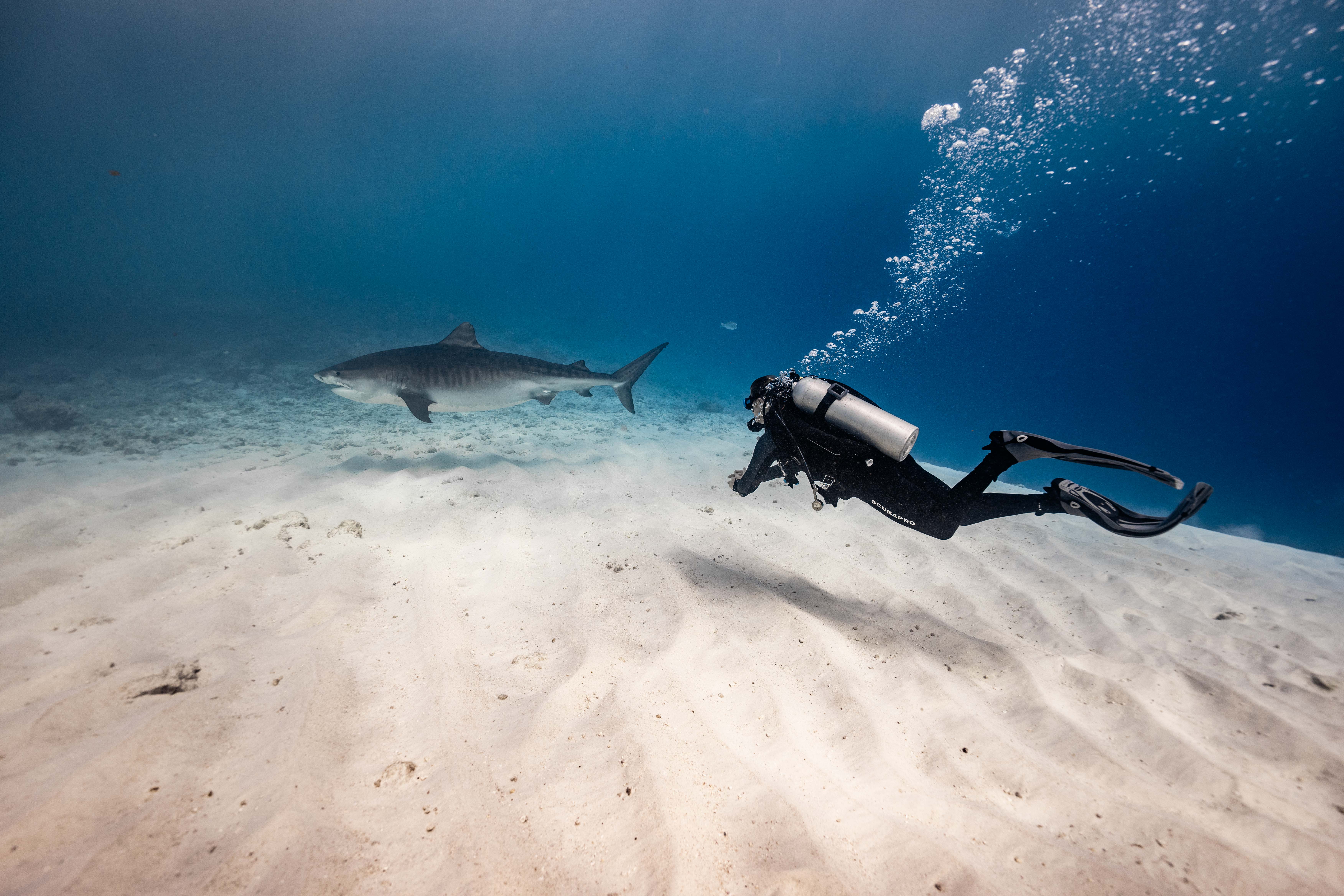
Tiger shark encounters, told with calm, cinematic depth.
The hero feature built for the headline release — a signature film, shark conservation story, or community-led dive log that anchors the homepage.
Underwater films, practical scuba learning, shark science, and citizen-minded ocean action — built to help divers turn every dive into something that matters.
Lead with the strongest shark film, a conservation-focused photo story, and one educational piece that shows the ocean through Sam's eyes.
The hero feature built for the headline release — a signature film, shark conservation story, or community-led dive log that anchors the homepage.
Theme-led galleries with lightbox viewing, future print releases, and licensing-ready story captions.
Campaigns, shark myth-busting, reef protection guides, and Scuba Network ambassador messages that connect dive stories with useful ocean action.
Logline: a fast, atmospheric cut designed to pull new divers into calm shark storytelling.
Logline: a short explainer turning fear-based myths into practical observation skills.
Logline: a practical diving-skills tutorial for steadier shots and lower reef impact.
Logline: a partnership format for dive brands, operators, and conservation campaigns.
Galleries by theme — from calm shark behaviour to Philippines Turtles. Tap any image for the full-screen lightbox, then use arrow keys to move between shots.
Clear learning pillars so the site feels educational from the first scroll — not just a portfolio.
Buoyancy, trim, finning, calm control, awareness, and safer in-water habits.
Composition, lighting, colour, storytelling, and creating cinematic footage underwater.
Currents, reefs, ecosystems, behaviour, and what divers should notice below the surface.
Species, myths, body language, safe interactions, and why sharks matter to healthy oceans.
What helps, what harms, how to dive with less impact, and how audiences take action.
These shark encounters are framed as teaching examples: calm posture, respectful distance, clear visibility, slow finning, and letting the shark choose its path. The goal is to show that responsible divers can share water with apex predators without chasing, touching, feeding, or staging behaviour for a camera.
View the shark examples →Watch speed, direction, posture, and whether the animal is investigating, cruising, or avoiding pressure.
Stay horizontal, breathe steadily, keep hands controlled, and never block the shark’s escape route.
Good footage comes from patience. No pursuit, no contact, and no dramatic frame that puts the animal under pressure.
Ethical wildlife interactions, responsible dive practices, education over fear, and storytelling that protects what it showcases.
A practical checklist covering buoyancy, reef-safe choices, no touching, no chasing, and better awareness underwater.
Behaviour explainers and real encounter examples that replace fear with observation, respect, and practical dive awareness.
A dedicated look at Scuba Network, useful dive logging, shared awareness, and the wider value of diver observations.
Practical habits for dives that are safer for reefs, wildlife, guides, and the divers following you.
With proper training, briefings, and respectful behaviour, shark encounters are remarkably calm. Most species are curious, not aggressive. The biggest risks come from poor diver behaviour — chasing, touching, or panicking.
Most shark dives require Advanced Open Water or equivalent, plus good buoyancy. For deeper or current-driven sites, Deep and Drift specialties help. We always brief conservatively and pair newer divers with experienced guides.
No baiting in sensitive habitats, no chasing, no flash where it stresses the animal, and always letting sharks set the distance. Storytelling should leave the subject as undisturbed as we found it.
Absolutely. Citizen-science logs, reef surveys, beach cleans, and informed travel choices all count. The first step is paying attention — the second is sharing what you see honestly.
Documentaries and series for divers who want to be educated, entertained, and inspired to protect the ocean — from big-picture conservation to shark behaviour and public perception.
Why watch: the best starting point for seeing the ocean as one connected system, not just a backdrop for diving. It gives divers the bigger conservation context behind every reef, current, species, and coastline.
Find it: Disney+.Why watch: an accessible, fun shark series that turns species spotting into a global adventure. It is useful for divers because it shows variety — sharks are not one thing, one mood, or one myth.
Find it: Netflix.Why watch: a visually strong shark-conservation documentary that is useful for thinking about public perception, activism, and how shark stories reach mainstream audiences. Watch it with a diver’s eye: what protects sharks, what creates debate, and what should never be copied underwater?
Find it: Netflix.Why watch: Steve Backshall makes wildlife exciting without losing the learning. For divers, the shark and predator episodes are a good reminder that “deadly” animals are usually best understood through behaviour, habitat, and respect.
Find it: BBC iPlayer.Why watch: a more entertainment-led choice, but important because it shows how fear, celebrity, and public perception shape the shark conversation. Watch it critically: what helps people respect sharks, and what leans into fear?
Find it: ITVX. Content note: strong language is flagged by ITVX.The follow list for wildlife storytelling, shark diving, marine science, conservation, and ocean-minded travel now has its own dedicated home.
Meet the instructors, marine biologists, guides and ocean people who have helped shape my scuba diving journey.
The person, places, people and purpose behind the underwater stories.
Hi, I’m Sam — although online, you’ll probably know me as Scuba Sam. Diving began in the Maldives in 2020, during one of the hardest periods of my life. Since then it has taken me to tiger sharks in the Bahamas and Maldives, thresher sharks in the Philippines, coral reefs, night dives and my 100th dive in January 2026.
Scuba Sam is where I share those experiences, the people and science behind them, and why the ocean is worth protecting. I’m an Advanced Open Water Diver, but I’m still learning — because no matter how many dives you complete, the ocean always has something new to teach you.